HONDA 12100-KR6-700 Cylinder Jug 75MM
fits model: Xl250r, Xl250, Std, 250. make: Honda. year: 1986–1987.
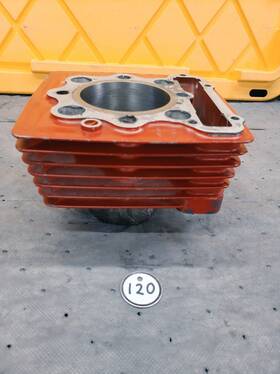
( Manufacturer Part Number: 12100-KR6-700 ), ( Part Type: Cylinder ), ( Vintage Part: Yes ), ( Country Of Origin: Japan )
Review HONDA Oem Xl Cylinder Jug 75mm fits XL250R XL250 STD 250 1986–1987
The **Honda 12100-KR6-700** is a meticulously crafted, air-cooled, single-cylinder engine originally designed for Honda s legendary **XL250R** and **XL250** models from the late 1980s, specifically the **1986 and 1987 production years**. This engine represents a refined blend of reliability, simplicity, and off-road capability, embodying Honda s commitment to durability and performance in adventure motorcycles. With a **249cc displacement** and a **75mm bore**, the KR6-700 delivers a balanced power output of approximately **18 horsepower at 7,000 RPM** and **16 lb-ft of torque**, making it well-suited for both on-road touring and rugged trail riding. Its **single overhead camshaft (SOHC) design** ensures smooth operation, while the **piston-port induction system** provides efficient air intake, contributing to its reputation for consistent power delivery across a wide RPM range.
The **KR6-700** is built with Honda s signature engineering precision, featuring a **cast-iron cylinder sleeve** for enhanced heat dissipation and longevity, paired with a **wet sump lubrication system** that ensures reliable oil circulation even under demanding conditions. The engine s **aluminum cylinder head** and **steel crankcase** combination strikes an ideal balance between weight reduction and structural integrity, while the **mechanical fuel injection (MFI) system** introduced in the late '80s improves throttle response and fuel efficiency compared to carbureted alternatives. This engine is also known for its **low-maintenance design**, with minimal internal friction and a robust **ball-bearing main journal** that reduces wear over time.
Mechanically, the **12100-KR6-700** is a direct replacement for the original engine found in the **XL250R (adventure bike)** and **XL250 (standard adventure bike)**, both of which were celebrated for their versatility and ruggedness. The **XL250R**, in particular, was a trailblazer in its class, offering a **50/50 weight distribution**, **long-travel suspension**, and a **dual-sport tire package** that made it equally at home on pavement or off-road. The **standard XL250** retained many of these features while focusing more on on-road comfort, with a slightly more upright riding position and a slightly different frame geometry. Both models shared the same **75mm bore and 63.5mm stroke**, contributing to their reputation for smooth, predictable power delivery.
For enthusiasts seeking a **restoration or upgrade project**, the **KR6-700** is an excellent choice due to its **abundance of aftermarket support**, including performance kits, upgraded pistons, and high-performance camshafts that can enhance power output while maintaining reliability. Its **timeless simplicity** with a single cylinder, minimal moving parts, and a straightforward design makes it a favorite among mechanics and riders alike who appreciate both ease of maintenance and enduring performance. Whether used in a **fully restored classic adventure bike** or as a standalone engine for a custom build, the **Honda 12100-KR6-700** remains a testament to Honda s legacy of building motorcycles that endure decades of use with minimal fuss.
For those looking to preserve the original character of their **1986 or 1987 XL250R or XL250**, this engine serves as the perfect **OEM replacement**, ensuring that the bike retains its authentic feel while benefiting from the improved reliability of a fresh, high-quality unit. With proper care including regular oil changes, chain adjustments, and suspension maintenance the **KR6-700** can easily accumulate **100,000 miles or more**, making it a **cost-effective and dependable powerplant** for both vintage enthusiasts and modern custom builders. Its **timeless design** and **proven durability** continue to make it a sought-after component in the world of classic and adventure motorcycles.
### **Pros and Cons of Buying a 1986-1987 Honda XL250R/XL250/XL250C (12100-KR6-700)**
#### **Pros**
1. **Classic Reliability** Honda s air-cooled, single-cylinder engines from this era are known for durability if properly maintained. Many still run strong after decades with basic upkeep.
2. **Simple Mechanics** The design is straightforward, making repairs and maintenance accessible for DIYers. Parts are widely available, especially for older Honda models.
3. **Lightweight and Maneuverable** The 250cc displacement keeps the bike nimble, making it ideal for city riding, trail work, or casual off-roading. The low seat height (27.2 inches) suits shorter riders.
4. **Fuel Efficiency** Single-cylinder engines are notoriously thrifty, often averaging 80 100 mpg, depending on riding style. This makes it cost-effective for short trips or daily commuting.
5. **Low Cost of Ownership** Compared to modern bikes, insurance, registration, and fuel costs are minimal. Parts and labor are cheap, especially if you handle maintenance yourself.
6. **Off-Road Capability** The XL250 series was designed for dual-sport use, with a sturdy frame, long-travel suspension (for the era), and knobby tires. It can handle light trails if properly tuned.
7. **Vintage Appeal** If you enjoy the retro look and sound of older motorcycles, this bike offers a nostalgic riding experience without the complexity of modern electronics.
8. **Easy to Modify** Upgrades like aftermarket exhausts, carburetor tweaks, or suspension swaps are relatively simple compared to modern bikes with complex fuel injection or ECU systems.
9. **Low Depreciation** Unlike modern bikes, these older models don t lose value quickly, making them a good long-term investment if maintained well.
10. **Community Support** There s a dedicated community of owners and restorers who share knowledge, parts, and tips, making it easier to find help when needed.
---
#### **Cons**
1. **Outdated Technology** The bike lacks modern safety features like ABS, traction control, or advanced suspension systems. Riding dynamics are less refined compared to contemporary dual-sports.
2. **Poor Fuel Economy in Stop-and-Go Traffic** While fuel-efficient on highways, the single-cylinder engine struggles with low-end torque in heavy traffic, making it feel sluggish in city stop-and-go.
3. **Comfort Limitations** The ergonomics are basic by today s standards. The seat is firm, the handlebars are narrow, and the suspension is stiff, leading to fatigue on long rides.
4. **Rust and Wear** Many examples from this era suffer from rust in the frame, swingarm, or suspension components, especially if they ve been stored improperly. A thorough inspection is critical.
5. **Limited Power** The 249cc engine produces only about 18 20 horsepower, which is adequate for light off-roading or casual riding but feels underpowered for aggressive trail use or highway cruising.
6. **Maintenance Requirements** Despite simplicity, the bike requires regular upkeep, including chain lubrication, valve adjustments, and carburetor cleaning. Neglect leads to premature failure.
7. **Resale Value** While not as depreciated as some modern bikes, the XL250 isn t a high-value collector s item unless it s in pristine condition or restored.
8. **Noise and Vibration** The air-cooled engine and lack of modern sound insulation make for a loud, vibration-heavy ride, which can be uncomfortable over long distances.
9. **Limited Aftermarket Support** While parts exist, modern aftermarket components (e.g., high-performance exhausts, suspension forks) are less refined than those available for newer bikes.
10. **Legal Restrictions** Some states or countries have stricter emissions or safety regulations that may make this bike ineligible for on-road use without modifications (e.g., catalytic converters, DOT-approved tires).
---
### **Conclusion**
The **1986-1987 Honda XL250R/XL250/XL250C** is a **great choice for riders who prioritize simplicity, low cost, and nostalgia** over modern comfort and performance. It excels as a **project bike, commuter, or light off-road companion** for those willing to invest time in maintenance. However, it s **not ideal for serious trail riding, long-distance touring, or riders seeking advanced safety features**.
If you find a **well-maintained example** with no major rust or mechanical issues, it can be a **rewarding and affordable** bike. If you re looking for something more capable off-road or comfortable for daily use, consider a **modern dual-sport or adventure bike** (e.g., Honda CRF250L, Yamaha TW200, or a used 4-stroke trail bike).
---
### **Recommendation**
- **Buy it if:**- You want a **budget-friendly, low-maintenance bike** for casual riding, commuting, or light trail use.
- You enjoy **vintage motorcycles** and don t mind the trade-offs in comfort and power.
- You re prepared to **inspect it thoroughly** for rust, engine condition, and suspension integrity.
- You plan to **ride it regularly** and perform basic maintenance yourself.
- **Avoid it if:**- You need **modern safety features** (ABS, traction control) or **high-performance handling**.
- You re looking for **long-distance comfort** or **serious off-road capability**.
- You can t commit to **regular upkeep** (chain lubrication, valve adjustments, carb cleaning).
- You prefer **modern fuel injection and electronic aids** over carbureted simplicity.
**Final Verdict:** A **solid choice for the right rider**, but not a premium or high-performance bike by today s standards. If you find one in good condition, it can be a **fun, reliable, and inexpensive** addition to your riding life.
Details:
CAME OFF A 1986 HONDA XL250R WITH 7,949 MILESFRAME #JH2MD1103GK201813 ENGINE #MD11E-5202448 SEE PICTURES FOR CONDITION AND WHATS INCLUDED.
part #: 12100kr6700 price
- $175.00
specifications cyclevintagee:
- for models: Xl250r, Xl250, Std, 250
- for makes: Honda
- for years: 1986-1987
- mpn: 12100-kr6-700
- part type: Cylinder
- vintage part: Yes
- country of origin: Japan
shipping cyclevintagee:
- class: Standard
- carrier: USPS
- cost: $0.00
- transit: 3-7 Days
- type: Calculated
- service: USPS Ground Advantage
offer cyclevintagee:
- started: April 29, 2026
- sold: 0
- best offers: True
- options: Ship-to-home
- availability: In Stock
- quantity: 1
returns cyclevintagee:
- paid by: Seller
- policy: Returns Accepted
- time: 30 Days
payments cyclevintagee:
- credit card: Visa
- other
- wallet: Google-pay
general cyclevintagee:
- Parts Accessories > Motorcycle Scooter Parts Accessories > Other Motorcycle Scooter Parts Accessories
- condition: Used
seller cyclevintagee:
- rating: 99.9%
- city: Spokane, Washington
- # reviews: 3461
Honda 12100-KR6-700 Is Similar To:
- 00-000-00 Honda Ct Trail Auxiliary Spare Canteen Gas Fuel Tank Oem (16.8% similar) Honda CT90 CT110 auxiliary canteen gas tank used good condition auxiliary tank bracket strap included gas capsicums as pictured...(August 14th, 2018)
- 000-0000 Honda Motor Company Motorcycle Factory Oem Working Tachometer With Hardware (27.3% similar) The teach was tested and is in good working condition. It measures 75 across the face. On the backside it has in stamped case. This is a factory tachometer from 1970 S honda CB750 motorcycle...(May 30th, 2018)
- 04503-918-010 Honda Carrier Genuine Oem Nos (21.7% similar) This is not a take off part, or reproduction. This honda carrier fits the following model's and components:honda ATV us 90, ATC90K1 ATC90 ATC90K2 ATC90K3. Being offered for offer is a genuine honda nos rare ACT accessory part. This is a rare unused oem vintage part. It is in its original packaging, ...(December 27th, 2018)
- 06110-268-030 Honda Gasket Set Top End Kit Nos Oem (20.5% similar) This is a new nos factory honda CA72 k0 CB72 top end gasket set kit. The original part number is. It is new and in a sealed package...(August 21st, 2018)
- 06111-429-000 Honda Nos Oem Gasket Kit (24.3% similar) Nos oem honda gasket kit b XL500 XR250...(October 4th, 2018)
- 06111-430-305 Honda Genuine Nos Oem (19.6% similar) Complete minus reed block gaskets. Nos oem gaskets set. Free shipping...(January 16th, 2018)
- 06220-hb9-305 Honda Nos Oem Clutch Lifter Part (29.3% similar) Nos oem honda clutch lifter kit...(February 27th, 2018)
- 06430-365-674 Honda Oem Brake Shoe (25.2% similar) New oem honda brake shoe set,free shipping P1...(September 10th, 2017)
- 06435-kz4-j41 Honda Genuine Parts Rear Brake Pads Oem Crf (22.4% similar) It should fit the following model's: FITS:2012 CRF250X2009 CRF250R2008 CRF450R2008 CRF250X2008 CRF250R2007 CRF450R2007 CRF250X2007 CR250R2007 CR125R2006 CRF450R2006 CRF250X2006 CRF250R2006 CR250R2006 CR125R2005 CRF450R2005 CRF250X2005 CRF250R2005 CR250R2005 CR125R2004 CRF450R2004 CRF250X2004 ...(November 4th, 2018)
- 06450-gag-003 Honda Oem Brake Shoes (25% similar) Oem nos honda front or rear brake shoes XR75 Z50J part no gag 003...(November 20th, 2017)
- 06451-ge2-405 Honda Oem Piston Seal (25% similar) I'm selling this new oem part. Item comes with free domestic shipping. If you don't see something assume it is included, but feel free to ask me before buy. It is a brand new part. What you see in the photos is exactly will get...(October 7th, 2017)