SUZUKI 11300-25840 Clutch Cover Right Engine Crankcase
fits model: Ts100, Tc100. make: Suzuki. year: 1973–1977.
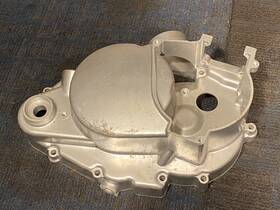
( Manufacturer Part Number: 11300-25840 ), ( Part Type: Cover Clutch Engine ), ( Placement On Vehicle: Right ), ( Vintage Part: Yes ), ( Country Of Origin: Japan )
Review SUZUKI Clutch Cover Right Side Engine Crankcase fits TS100 TC100 1973–1977
The **Suzuki 11300-25840 Clutch Cover for 1973 1977 TS100 and TC100** is a meticulously engineered, high-performance component designed to ensure seamless power transfer and optimal clutch operation in these iconic Japanese trail bikes. Crafted from durable, heat-resistant materials, this clutch cover is a precision-machined fitment that securely seals the right engine crankcase, preventing oil leaks and maintaining peak engine performance. The robust construction of the cover, featuring a tight, gasket-sealed interface, helps preserve internal lubrication while reducing friction and wear on critical engine components. Ideal for both restoration projects and high-mileage maintenance, this clutch cover is built to withstand the demands of off-road riding, where reliability and durability are paramount. Its compatibility with the TS100 and TC100 models ensures an exact fit, allowing for easy installation without modification, whether you're working on a classic trail bike or a restored vintage machine. Whether you're a mechanic, an enthusiast, or a rider seeking long-term reliability, this clutch cover is an essential upgrade that enhances engine protection and clutch longevity, keeping your Suzuki running smoothly for years to come.
### **Pros and Cons of buying a Suzuki 11300-25840 (1973 1977 TS100/TC100 Clutch Cover & Engine Crankcase)**
#### **Pros:**1. **Authentic Restoration** If you own a classic TS100 or TC100 and are restoring it to factory condition, this part ensures proper fitment and historical accuracy. Aftermarket replacements may not match the original design or quality.
2. **Reliability for Original Use** Suzuki s original components were built to last, especially for the lightweight, high-revving engines in these bikes. A genuine clutch cover and crankcase will perform as intended, reducing the risk of premature failure.
3. **Easier Maintenance & Repairs** Using OEM parts simplifies future repairs, as mechanics familiar with classic Suzuki models will recognize the components. Aftermarket parts may require additional modifications or adjustments.
4. **Resale Value Preservation** If you plan to sell the bike later, keeping original or high-quality OEM parts can enhance its appeal to collectors and enthusiasts who prioritize authenticity.
5. **Durability for Light-Duty Use** The crankcase and clutch cover are robust for the intended use of these bikes (light commuting, track days, or show bikes). While not built for heavy-duty abuse, they should hold up well with proper maintenance.
6. **Compatibility with Other Original Parts** Since this is an OEM component, it will align perfectly with other original Suzuki parts (e.g., clutch, crankshaft, timing components), reducing clearance or fitment issues.
7. **Avoiding Common Aftermarket Issues** Some aftermarket clutch covers or crankcases may have thin walls, poor sealing, or incorrect material, leading to oil leaks or reduced strength. OEM parts are less likely to have these flaws.
---
#### **Cons:**1. **Limited Availability & Lead Times** OEM parts for vintage Suzuki models, especially clutch covers and crankcases, are not mass-produced. Finding a seller may require searching through specialty shops, eBay, or restoration forums, and stock may be limited.
2. **Higher Cost Compared to Aftermarket** Genuine OEM parts are often more expensive than aftermarket alternatives. For a restoration project, this can add up quickly, especially if multiple components are needed.
3. **Potential for Wear or Damage** If the part has been previously owned or stored improperly, it may show signs of wear (e.g., cracks, rust, or worn gaskets). Inspecting the item closely or requesting photos/videos from the seller is crucial.
4. **No Modern Upgrades** Unlike aftermarket parts, OEM components won t include modern improvements such as reinforced materials, better sealing, or lighter weight designs. If you re pushing the bike harder than intended, this could be a drawback.
5. **Installation Challenges** Some vintage Suzuki parts require specialized tools or experience to install correctly. If you re not familiar with the bike s mechanics, you may need to pay a mechanic for installation, adding to the cost.
6. **Risk of Counterfeit Parts** On platforms like eBay or Facebook Marketplace, there s a chance of receiving a replica or poorly made part labeled as "OEM." Always verify the seller s reputation and ask for proof of authenticity (e.g., original packaging, serial numbers, or a seller who specializes in classic Suzuki parts).
7. **Weight & Size Limitations** The crankcase and clutch cover are designed for the stock engine configuration. Modifying the bike significantly (e.g., adding a larger engine or heavy-duty components) may require aftermarket parts that aren t compatible with the OEM design.
---
### **Conclusion:** Buying the **Suzuki 11300-25840 clutch cover and engine crankcase (1973 1977 TS100/TC100)** is a **strong choice if**:- You prioritize **authenticity and historical accuracy** for a restoration project.
- You re willing to pay a premium for **reliable, original components** that fit perfectly.
- You plan to use the bike for **light-duty purposes** (show, track days, or casual riding) rather than heavy modification.
- You have access to **specialty sellers** or are prepared to search extensively for the part.
However, if:- You re on a **tight budget** and can find a **high-quality aftermarket alternative** (e.g., from a reputable brand like **Suzuki Performance Parts, K&S, or a trusted custom shop**), it may be a more cost-effective option.
- You re planning **aggressive modifications** (e.g., big bore kits, heavy-duty suspension), aftermarket parts may be necessary.
- You lack the **time or expertise** to install vintage components properly, factoring in labor costs could make aftermarket parts more appealing.
---
### **Recommendation:**1. **If Restoring to Stock Specs:** **Proceed with the OEM part.** The benefits of authenticity and long-term reliability outweigh the higher cost, especially for a collector or show bike. Verify the seller s legitimacy and inspect the part for damage before purchasing.
2. **If Budget is a Concern:** **Compare aftermarket options.** Look for parts from brands with a strong reputation for classic Suzuki components (e.g., **Suzuki Performance Parts, K&S, or a trusted local bike shop**). Ensure the aftermarket part meets your durability and fitment needs.
3. **If Modifying the Bike:** **Consider aftermarket alternatives.** OEM parts may not support heavy modifications, and aftermarket crankcases/clutch covers (e.g., from **Suzuki or third-party manufacturers**) often include modern improvements.
4. **If Unsure:** **Consult a Suzuki Specialist.** A mechanic or restorer familiar with these models can advise whether the OEM part is necessary or if a compatible aftermarket option exists.
**Final Verdict:** For a **true-to-original restoration**, the OEM part is ideal. For **cost efficiency or modification flexibility**, a well-researched aftermarket alternative may be the better choice. Always prioritize **quality and compatibility** over price.
Details:
Good usable shape. Location: HD1 1973-77 Suzuki TC100 and TS100 clutch cover. Condition and contents as shown.
part #: 1130025840 prices
- $46.95-$63.99
specifications cyclevintagee:
- for models: Ts100, Tc100
- for makes: Suzuki
- for years: 1973-1977
- mpn: 11300-25840
- part type: Cover Clutch Engine
- placement on vehicle: Right
- vintage part: Yes
- country of origin: Japan
general cyclevintagee:
- condition: Used
- Parts Accessories > Motorcycle Scooter Parts Accessories > Other Motorcycle Scooter Parts Accessories
returns cyclevintagee:
- policy: Returns Accepted
- paid by: Seller
- time: 30 Days
shipping cyclevintagee:
- service: USPS Ground Advantage
- transit: 5-10 Days
- cost: $0.00
- type: Calculated
- carrier: USPS
- class: Standard
payments cyclevintagee:
- other
- wallet: Apple-pay
- credit card: Diners-club
seller cyclevintagee:
- # reviews: 4
- city: Auburn, Washington
- rating: 100.0%
offer cyclevintagee:
- options: Ship-to-home
- started: April 9, 2026
- best offers: True
- quantity: 1
- availability: In Stock
- sold: 0
Suzuki 11300-25840 Is Similar To:
- 11371-34000 11371-34000 Suzuki Nos Left Engine (26.6% similar) This offer is for a suzuki nos left rear engine sprocket cover dark has few light scratches shelf wear and some discoloration. See close-up of narrow end for example. Fits: GT550, GT550J, suzuki this is a new old stock part...(October 12th, 2017)
- 01111-05108 Suzuki Nos Oem Engine Bolts Qty Tc (29.9% similar) Not looking at the pictures, reading. As this stops us from selling the item to someone else who needs. Suzuki nos oem engine bolts qty 2 tc part 05108THIS is for a new. What you see in the pictures is get, nothing more less. They will not look like new parts. 1 mile south of town on M-19. Please ...(April 16th, 2018)
- 09259-20003 Nos Suzuki Crankcase Oil Fill Cap Plug Rm Gt (23.4% similar) I keep finding them in the parts box I'm going thru right now. Very last 1 of these I have in stock. The bin label is gone with this 1 fits to many list suzuki supersedes plug set used on these model's and components: 1983 ALT125 crankcase cover ALT50 clutch - oil pump LT125 1984 1985 LT250R ...(May 1st, 2018)
- 09283-26003 Suzuki 150-s32-2 Right Crankshaft (38.1% similar) Shipping method: USPS priority mail...(February 6th, 2018)
- 09285-06015 Suzuki Nos Oem Clutch Oil Seal Dl Part (35.1% similar) They may not be clean. They will not look like new parts. 1 mile south of town on M-19. They may have some dents, scratches, cracks and or missing pieces. Parts may have some shelf wear from years of being on shelves and or moved over. The first 100 matching model's are shown below. They may have ...(April 16th, 2018)
- 09440-19027 Suzuki Clutch Springs Oem (32.2% similar) 6 brand new unused suzuki oem clutch springs. All sealed and in original packing with the exception of one that was taken out for photo...(May 30th, 2018)
- 11171-33600 Suzuki Nos Sebring Right Hand Cylinder Head Cover (28.2% similar) Part has never been on a bike before. It is in the original package and great condition. Nos 1973 suzuki GT380 Sebring right hand cylinder head cover shipping in us...(May 16th, 2018)
- 11210-11600 Suzuki Hustler Right Cylinder Nos Original Box (37.4% similar) For x6 hustler TC250 scrambler. Can ship int'l at extra cost...(April 29th, 2018)
- 11300-48812 Suzuki Ts100 Lower Engine (39% similar) Obviously the crank assembly's are different. Sport city-parts. RFC oem, obsolete. The engine disassembled easy, no problems with stripping bolts. This is sold as rebuild able, due to the kick starter engaging only once in approximately 10 kicks. These cases fit TS125 as well. Suzuki case half's, ...(December 26th, 2017)
- 11301-29851 Suzuki Lower Engine Dr-z400s (33.1% similar) It ran like a top. Fed ex shipping ground in large box. Mechanical sound. Crankshaft assembly 29F11 is used from case in many more model's, this machine was well kept, last picture show right before parting. 12X12X14 weighing pounds. Sport city-parts. RFC suzuki DRZ400S lower engine assembly from a...(December 26th, 2017)
- 11341-30002 Suzuki Clutch Cover (33.9% similar) Shipping method: USPS priority mail...(May 6th, 2018)