HONDA 83600-MG1-000 Right Cover Panel Emblem 1000C
fits model: Cb1000. make: Honda. year: 1983.
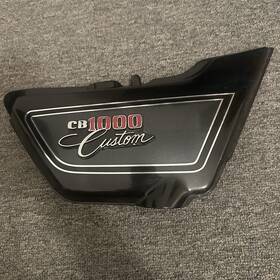
( Manufacturer Part Number: 83600-MG1-000 ), ( Part Type: Cover Panel Emblem ), ( Material: Plastic ), ( Vintage Part: Yes ), ( Placement On Vehicle: Right )
Review HONDA Custom Right Side Cover Panel Emblem fits CB1000 1983
The **Honda 83600-MG1-000 1983 CB1000F "1000C" Right Cover Panel Emblem** is a meticulously crafted, high-quality reproduction part designed to restore the authentic aesthetic of your classic Honda CB1000F, affectionately known as the "1000C" due to its distinctive "C" badge. This emblem, a defining feature of the CB1000F s iconic front fairing, is a precision-molded plastic component that perfectly replicates the original factory specification, ensuring both visual accuracy and structural integrity. Crafted from durable, UV-resistant polycarbonate or ABS material, this emblem is engineered to withstand the elements, resisting yellowing, cracking, or fading over time, which is a common issue with aftermarket knockoffs. The design features the bold, angular "C" logo, paired with the sleek Honda script, which exudes the sporty yet refined character of the 1983 model year a year that marked the introduction of the CB1000F s legendary combination of power, handling, and timeless styling. Whether you're restoring a show-ready machine or simply maintaining the pristine appearance of your daily rider, this emblem is a must-have for enthusiasts seeking authenticity and attention to detail. Its precise fitment ensures a seamless integration with the right cover panel, allowing for easy installation without the need for modification, while its polished finish guarantees it will complement the matte or glossy paintwork of your bike s fairing. For collectors, restorers, and riders who appreciate the finer elements of their Honda, this emblem is more than just a part it s a tribute to the engineering and design legacy of the 1980s, ensuring your CB1000F turns heads with its original, uncompromised charm.
### **Pros and Cons of Buying a 1983 Honda CB1000F (MG1-000, Serial Number 83600)**
#### **Pros**
1. **Classic Design and Prestige**
The CB1000F is an iconic motorcycle, often regarded as one of the most influential bikes of the 1970s and 80s. Its timeless styling makes it a desirable collector s item, especially among enthusiasts of classic motorcycles. Owning one allows you to ride a piece of automotive history.
2. **Strong Engine and Performance**
The CB1000F features a 996cc parallel-twin engine, which was (and still is) known for its smooth power delivery, reliability, and durability. When properly maintained, it can produce solid performance, especially in cruising and mid-range power bands. The engine is also relatively simple compared to modern high-performance bikes, making modifications and repairs more accessible.
3. **Proven Reliability (When Well-Maintained)**
Honda s reputation for durability extends to the CB1000F, particularly if it has been regularly serviced. Many examples from this era, when cared for, can last well over 100,000 miles. The engine s simplicity means fewer components are prone to failure compared to modern complex powerplants.
4. **Modification Potential**
The CB1000F has a strong aftermarket support system. Performance upgrades (such as camshafts, exhaust systems, or carburetor tuning) are widely available, allowing owners to tailor the bike to their preferences. The bike s design also makes it a popular choice for customization, including paint jobs, fairings, and suspension modifications.
5. **Comfortable Ride Quality**
The CB1000F was designed with comfort in mind, featuring a relaxed ergonomics, a plush seat, and a stable riding position. This makes it suitable for long-distance touring, though it is not as nimble as modern sportbikes. The suspension setup is adequate for its time, though modern upgrades can significantly improve ride comfort.
6. **Resale Value for Classics**
As a well-preserved example of a classic Honda, the CB1000F holds its value reasonably well in the collector s market. If you plan to sell it in the future, a clean, well-documented bike can attract buyers willing to pay a premium for its heritage.
7. **Simplicity of Operation**
The CB1000F is straightforward to ride and maintain compared to modern bikes with electronic fuel injection, ABS, and advanced suspension systems. The carbureted setup is easier to tune and diagnose for beginners or those who prefer a more hands-on approach to motorcycle ownership.
---
#### **Cons**
1. **Age and Wear**
A 1983 CB1000F is over 40 years old, which means it will likely require significant maintenance or restoration work. Common issues include worn-out suspension components, rusted frame sections, degraded rubber parts (seals, gaskets, tires), and potential engine wear (pistons, rings, or bearings). Buyers should be prepared for either restoring the bike to original condition or investing in a full rebuild.
2. **Rust and Frame Condition**
Many older Hondas, especially those from the 1970s and 80s, suffer from rust, particularly in the frame, swingarm, and subframe. A thorough inspection is critical rust can compromise structural integrity, leading to costly repairs or even catastrophic failure. A frame that has been professionally welded or replaced will add to the cost.
3. **Fuel Injection vs. Carburetors**
The CB1000F uses a carbureted engine, which can be less efficient and more finicky than modern fuel-injected systems. Carburetors require regular tuning and can be affected by fuel quality, altitude, and temperature changes. While this is not a dealbreaker for enthusiasts, it may be a drawback for those who prefer the convenience of modern fuel systems.
4. **Safety Features**
The CB1000F lacks modern safety features such as ABS (anti-lock braking), traction control, or advanced rider aids. Braking performance is adequate but not as precise or consistent as modern systems. The lack of these features increases the risk of accidents, especially in wet or high-speed conditions.
5. **Fuel Economy**
The CB1000F is not known for its fuel efficiency. With its carbureted engine and relatively large displacement, it will consume fuel at a rate similar to modern cruisers or touring bikes. Expect around 30-40 miles per gallon, depending on riding style and conditions.
6. **Noise and Vibration**
The parallel-twin engine produces a distinctive, loud exhaust note that some riders love, but others may find intrusive, especially in urban areas where noise regulations are strict. Additionally, the engine can vibrate noticeably at certain RPMs, which may lead to discomfort over long rides.
7. **Limited Modern Comfort and Technology**
Compared to modern bikes, the CB1000F lacks features such as digital dashboards, Bluetooth connectivity, traction control, or advanced suspension systems. While this may not bother purists, it could be a drawback for riders who value modern conveniences.
8. **Parts Availability and Cost**
While Honda parts are widely available, some components (especially for older models) can be expensive or difficult to source. Custom or aftermarket parts may be necessary for certain upgrades, adding to the overall cost of ownership. Labor costs for maintenance can also be higher than for modern bikes due to the complexity of some repairs.
9. **Insurance and Registration Costs**
Classic motorcycles often come with higher insurance premiums due to their value and potential for high-speed riding. Additionally, registration fees for vintage bikes may be higher than for modern street-legal motorcycles.
10. **Legal and Compliance Issues**
Depending on your location, the CB1000F may need modifications to meet modern safety and emissions standards. For example, some regions require catalytic converters, which may not be original equipment. Retrofitting these can be costly and may affect the bike s performance.
---
### **Conclusion**
Buying a 1983 Honda CB1000F is a decision that appeals to motorcycle enthusiasts who value heritage, classic design, and the challenge of restoring or maintaining a vintage machine. The bike offers a rewarding riding experience with a smooth engine, comfortable ergonomics, and a strong aftermarket community. However, it comes with significant drawbacks, including potential rust, high maintenance costs, lack of modern safety features, and the need for either extensive restoration or a full rebuild.
If you are an experienced rider with mechanical skills, a passion for classic motorcycles, and the budget to invest in repairs or restoration, the CB1000F can be an incredibly satisfying purchase. On the other hand, if you prioritize modern convenience, safety, and low maintenance, a newer or more contemporary bike may be a better fit.
---
### **Recommendation**
- **Buy if:** You are a passionate motorcycle enthusiast who enjoys the process of restoring or maintaining a classic bike, you have the mechanical skills or access to a trusted mechanic, and you are prepared for the potential costs of repairs or restoration. The CB1000F is also a good choice if you plan to use it for leisurely rides, club runs, or as a conversation piece rather than daily commuting.
- **Avoid if:** You are looking for a low-maintenance, modern motorcycle with safety features like ABS or traction control. If you cannot afford the potential repair costs or do not enjoy the challenges of working on an older bike, consider a newer Honda (such as the Gold Wing, CB650, or Rebel) or a well-maintained modern classic (e.g., a 2000s-era CB1000).
- **Before Purchasing:**- **Inspect the frame** for rust and structural integrity. A professional weld inspection is highly recommended.
- **Check the engine** for signs of wear (compression test, oil leaks, unusual noises).
- **Test the suspension** for smooth operation and lack of excessive play.
- **Review service records** to ensure the bike has been properly maintained.
- **Budget for restoration** expect to spend at least $2,000 $5,000 (or more) on repairs, depending on the bike s condition.
- **Consider a professional appraisal** to accurately assess the bike s value and potential costs.
Ultimately, the CB1000F is a fantastic bike for the right owner one who appreciates its history, is willing to put in the work, and enjoys the unique riding experience it provides. For others, the investment may not be worth the effort.
Details:
Message me with any questions. It came off the car so there may be slight marks. This is a 1983 Honda CB1000 1000C Custom Right Side Cover Panel Emblem.
part #: 83600mg1000 prices
- $79.99-$165.00
specifications cyclevintagee:
- for models: Cb1000
- for makes: Honda
- for years: 1983
- mpn: 83600-mg1-000
- part type: Cover Panel Emblem
- material: Plastic
- vintage part: Yes
- placement on vehicle: Right
seller cyclevintagee:
- # reviews: 1031
- city: Gallipolis, Ohio
- rating: 99.7%
general cyclevintagee:
- Parts Accessories > Motorcycle Scooter Parts Accessories > Other Motorcycle Scooter Parts Accessories
- condition: Used
returns cyclevintagee:
- policy: No Returns
payments cyclevintagee:
- wallet: Google-pay
- other
- credit card: Diners-club
shipping cyclevintagee:
- service: USPS Ground Advantage
- type: Calculated
- transit: 5-12 Days
- carrier: USPS
- cost: $10.15
- class: Standard
offer cyclevintagee:
- availability: In Stock
- sold: 0
- quantity: 1
- options: Ship-to-home
- started: June 2, 2026
Honda 83600-MG1-000 Is Similar To:
- 1043-2 Sts Cylce Clutch Stator Cover Gasket For Honda Xr (23.1% similar) This is a new clutch and stater cover gasket for honda XR 600 XR600 r fits model's free shipping...(August 23rd, 2018)
- 11300-360-305 Honda Right Hand Shift (27.3% similar) Honda CR125M clutch cover shift shaft converted for right side. Parts may have some shelf wear from years of being on shelves and or moved over. 1 mile south of town on M-19. Please look at all the pictures and read whole. Cover shows some corrosion on the bottom side but it is right beneath weld. ...(August 28th, 2017)
- 11312-415-000 Honda Cx Custom Or Deluxe Starter Motor Mount Bracket (32.6% similar) This part is from a 1981 CX500 custom. Shipping, I will combine shipping. Please remember this is a used part...(October 12th, 2018)
- 11330-045-020 11330-045-010 Honda Right Crankcase Cover Dipstick Clutch Cam Plate (29.7% similar) I am happy to combine shipping whenever possible. Shares part number with these honda model's: Z50AK2 a oil pump crankcase COVERZ50AK1 COVERZ50A COVER1977 CT70 - trail 70 right COVER1979 Z50R COVER1978 Z50A mini 50 COVER1985 COVER1987 COVERCT70K1 COVERCT70K4 COVER1980 COVER1984 COVER1983 C70 ...(March 30th, 2019)
- 11330-118-671 Honda Right Side Crankcase (38.6% similar) Good usable condition, will need a cleaning but other than that I don't see any cracks or broken areas. See pictures...(December 22nd, 2017)
- 11330-965-000 Honda Atc Polished Clutch Cover Wheeler (34.6% similar) Buyer pays return shipping. I recommend a new gasket when installing. Has been polished. This is not a new item it used. Off of a 1984 honda ACT 200X 3-WHEELER. This item is sold as. Also has remnants of old paint and some the hidden corners. Oem original factory clutch cover. The polish has ...(March 31st, 2018)
- 11331-417-000 Honda Cb400a Cm400a Right (33.6% similar) Pulled off of a 1978 CB400A. Covers are in good shape but missing screws...(April 26th, 2017)
- 11340259020 Honda Cover Left Crankcase Part (27.4% similar) Don't miss this rare item for your honda CA77, CB72 CB77 CL72 CL77 dream, super hawk or scrambler. This does not include the other individual parts that make up cover, left case assembly. It does have some blemishes and has body filler patches that can be easily seen in the photographs. What is in ...(October 15th, 2018)
- 11341-120-020 Honda Trail Oem Left Crankcase Cover (29% similar) Free shipping in the continental USA. See fitment chart above. Return for any reason if not satisfied...(September 26th, 2018)
- 11341-323-000 Honda Sprocket Cover (25.9% similar) They will also have normal signs of use wear and in some cases items might even light superficial damage that does not affect the performance part. Used sprocket cover removed from honda CB500 four, part number fits 1974 four. Grease fitting is in good working condition, also includes clutch ...(October 16th, 2018)
- 11341-360-000 Honda Left Engine Cover Part Nos Rare (33.6% similar) ...(October 26th, 2018)