TRIUMPH 57-1736 Clutch Push Rod T1736
fits model: T120, T140, 650, 750. make: Triumph. year: 1963-82.
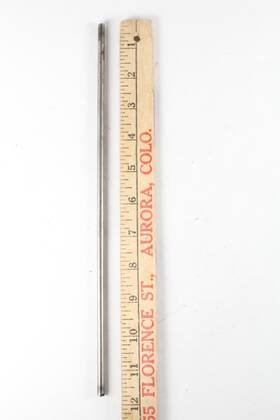
( Manufacturer Part Number: 57-1736 ), ( Part Type: Clutch Rod ), ( Vintage Part: Yes ), ( Country Of Origin: United Kingdom )
Review TRIUMPH Clutch Push Rod fits T120 T140 650 750 1963-82
The Triumph 57-1736 clutch push rod, specifically designed for the iconic 650 and 750 cc models including the T120 and T140 from the years 1963 through 1982, is a meticulously crafted component essential for the smooth and reliable operation of these legendary motorcycles. This push rod, bearing the part number T1736, is a critical linkage in the clutch mechanism, translating the rider s lever input into the precise engagement and disengagement of the clutch plates. Crafted from high-quality, durable materials, it is engineered to withstand the demands of high-performance riding while maintaining a tight tolerance to ensure optimal clutch operation. The design of this push rod is both simple yet ingenious, featuring a robust shaft with a threaded end that securely fastens to the clutch fork, allowing for easy installation and adjustment. Its smooth, polished surface minimizes friction and wear, contributing to the longevity of the entire clutch assembly. Whether you're restoring a classic Triumph to its former glory or maintaining a well-loved ride, this push rod is a vital replacement part that ensures the clutch operates with the precision and responsiveness expected from these timeless machines. Its compatibility with a wide range of Triumph models from the mid-1960s to the early 1980s makes it an indispensable component for enthusiasts looking to preserve the performance and authenticity of their beloved motorcycles.
### **Pros and Cons of Buying a Triumph 57-1736 (650/750 T120/T140, 1963 1982) Clutch Push Rod (T1736)**
#### **Pros**
1. **Classic British Bike Heritage**
The Triumph 57-1736 series (T120/T140) is an iconic motorcycle, representing the golden era of British motorcycle engineering. Owning one connects you to a rich history of motorcycle culture, particularly the 1960s 1980s British bike scene.
2. **Strong, Reliable Engine**
The 650cc parallel twin engine is well-proven, known for its smooth power delivery and durability. With proper maintenance, these engines can last well beyond 100,000 miles, especially if they ve been well-looked-after.
3. **Timeless Design**
The T120/T140 has a timeless, aggressive styling that remains desirable. The classic "Triumph" look is instantly recognizable and appeals to enthusiasts who appreciate vintage aesthetics.
4. **Modification Potential**
These bikes are highly modifiable. Aftermarket support is strong, with options for modern components (e.g., fuel injection, modern suspension, electric start) while retaining the original character.
5. **Community & Support**
There is a large, passionate community of Triumph owners, mechanics, and restorers. Parts, knowledge, and restoration advice are widely available, making maintenance and repairs more accessible.
6. **Good for Cruising & Touring (with Mods)**
While not originally designed for long-distance touring, with modern upgrades (comfortable seat, windscreen, luggage), these bikes can be adapted for leisure riding.
7. **Lower Running Costs (Compared to Modern Bikes)**
Fuel efficiency is decent for its class, and parts are often cheaper than those for modern bikes, though rare or original parts can be expensive.
---
#### **Cons**
1. **High Maintenance Requirements**
These bikes are not "set-and-forget." They require regular attention to keep them running smoothly. Common issues include:- **Carburetion** (vintage Triumphs often suffer from dirty or worn carburetors, requiring frequent cleaning or replacement).
- **Valvetrain wear** (timing chain and camshaft wear can be an issue, especially on higher-mileage examples).
- **Electrical gremlins** (vintage wiring and generators can be finicky, often requiring rewiring or replacement).
- **Rust** (especially on older models, particularly in the frame, forks, and exhaust).
2. **Original Condition Depends on Previous Care**
Many of these bikes have been poorly maintained or neglected. Buying one in original condition is rare and expensive; most require significant restoration work. Even "restored" examples may have hidden issues.
3. **Reliability Issues with Age**
- **Clutch & Transmission**: The original clutch and gearbox (especially in the T120) can be weak. The T140 improved this, but older models may still struggle with clutch slippage or gearbox wear.
- **Suspension**: Original forks and shock absorbers are stiff and uncomfortable by modern standards. Upgrading is often necessary.
- **Brakes**: Drum brakes (on older models) are inadequate for modern safety standards; disc upgrades are common.
4. **Fuel & Emissions Compliance**
- **Carbureted models** may not meet modern emissions standards in some regions, requiring modifications (e.g., catalytic converters, EFI conversions).
- **Fuel quality** can be an issue; modern unleaded fuel may not be ideal for older engines, though this is less of a problem with modern fuel blends.
5. **Cost of Restoration**
A full restoration can be expensive, especially if parts need to be sourced. Original components (e.g., handlebars, seat, fenders) are highly sought after and costly. Labor costs for vintage work can also be high.
6. **Limited Modern Comfort & Safety**
- **Ergonomics**: The riding position is aggressive and not suited for everyone, especially taller riders.
- **Safety**: Original equipment (e.g., brakes, tires) is outdated by modern standards. Upgrades are often necessary for safe riding.
7. **Depreciation**
While classic bikes can appreciate in value, they also depreciate quickly if not well-maintained. A poorly cared-for example will lose value rapidly.
8. **Parts Availability**
While parts are available, some original components (e.g., specific carburetors, gauges, or trim) can be difficult or expensive to find. Aftermarket parts may not always match the original look.
---
### **Conclusion**
The Triumph 57-1736 (T120/T140) is a fantastic motorcycle for enthusiasts who appreciate classic British design, mechanical challenge, and the joy of restoration. It is **not** a practical daily rider for everyone it demands attention, patience, and a willingness to invest time and money into maintenance or upgrades.
If you are **passionate about vintage motorcycles, enjoy mechanical work, and don t mind spending significant time and effort on restoration**, this bike can be an incredibly rewarding project. It offers a unique blend of history, character, and modding potential.
However, if you prioritize **modern reliability, comfort, and low-maintenance riding**, this bike may not be the best choice. In that case, consider a modern classic (e.g., a restored 1990s Triumph or a contemporary bike with classic styling).
---
### **Recommendation**
1. **If you re buying used:**- **Prioritize bikes with a service history** look for records of clutch, carburetor, and valvetrain work.
- **Test ride thoroughly** listen for unusual noises (knocking, whining) and check for smooth shifting.
- **Budget for restoration** expect to spend at least **$3,000 $6,000 ** on a project bike, depending on its condition.
- **Consider a T140 over a T120** the T140 has a stronger clutch and transmission, making it more reliable for daily use.
2. **If you re new to vintage bikes:**- Start with a **restored example** (not a "project") to avoid overwhelming yourself.
- Join Triumph forums (e.g., **Triumph Motorcycles Forum, Classic Motorcycle Forum**) for advice on specific models.
- Consider **modernizing key components** (e.g., disc brakes, modern suspension, electric start) while keeping the original aesthetic.
3. **If you re looking for a daily rider:**- A **modern classic** (e.g., a restored 1990s Triumph Bonneville, a GS1200, or a contemporary bike like a Triumph Speed Triple) may offer better reliability and comfort.
4. **If you love the challenge:**- Buy a **well-documented project bike** with a clear plan for restoration. Focus on **one major system at a time** (e.g., engine, suspension, electrical) to avoid burnout.
Ultimately, the Triumph 57-1736 is a **great bike for the right owner** someone who values the journey as much as the destination. If you re prepared for the work, it can be an endlessly satisfying machine. If not, there are plenty of other options that offer modern convenience without sacrificing classic charm.
Details:
part #: 571736 prices
- $13.99-$22.00
specifications cyclevintagee:
- for models: T120, T140, 650, 750
- for makes: Triumph
- for years: 1963-82
- mpn: 57-1736
- part type: Clutch Rod
- vintage part: Yes
- country of origin: United Kingdom
general cyclevintagee:
- Parts Accessories > Motorcycle Scooter Parts Accessories > Other Motorcycle Scooter Parts Accessories
- condition: Used
returns cyclevintagee:
- policy: Returns Accepted
- paid by: Buyer
- time: 30 Days
payments cyclevintagee:
- credit card: Diners-club
- other
- wallet: Google-pay
seller cyclevintagee:
- # reviews: 737
- rating: 99.8%
- city: Denver, Colorado
shipping cyclevintagee:
- class: Standard, Economy
- cost: $0.00
- service: USPS Ground Advantage, UPS Ground Saver
- type: Calculated
- transit: 3-7 Days
- carrier: USPS, UPS
offer cyclevintagee:
- started: April 21, 2026
- options: Ship-to-home
- sold: 0
- availability: In Stock
- quantity: 5
Triumph 57-1736 Is Similar To:
- 57-1722-23 Nos Clutch Shock Absorber Rubber Set Triumph (33.9% similar) ...(January 10th, 2019)
- 57-1931 Jrc Triumph Bsa Clutch (32.3% similar) These are superb quality and made in the united kingdom. These fit numerous triumph and BSA model's...(March 20th, 2017)
- 57-2547 Vintage Triumph Nos Clutch Release Arm British Part (31.1% similar) If there would be a problem of some kind let me know through message and it will look at. I will combine shipping when ever can, use USPS flat rate boxes and put as much they hold. I am trying to liquidate the inventory that have. The number in title is an Inc, and has nothing to do with part. These...(December 20th, 2018)
- 57-2552 Jrc Spares Nos Clutch Pull Rod Triumph Trident Bsa Rocket (32.8% similar) ...(December 14th, 2018)
- 57-2554 Clutch Cover For Triumph Trident Hurricane Bsa Rocket (29% similar) Includes clutch cover as shown. Photos show details. The screw threads and holds tight. This is not a business for me, just way to buy and sell some items of interest. Cover is in good shape with a small hairline crack by one breather screw hole, shown last photo. Ask questions before buying. This ...(February 16th, 2019)
- 57-4595 Triumph T150 Trident Primary-clutch (37.7% similar) However, if you are looking for that perfect mirror finish then this part is not. Cover is in very good condition but does have scratches and see pics from years of shelf life should buff out to a nice shiny finish. You get exactly whats shown, nothing more, less. Keep watching because I have a mess...(October 28th, 2017)
- 70-1511 Jrc Spares Nos Connecting Rod Bushing Triumph Pre (15% similar) ...(November 2nd, 2018)
- 97-3875 Triumph Used Oem Steering Rod Damper Knob (25% similar) ...(March 8th, 2018)
- T1970 57-1970 Triumph Unit Twins Daytona Tiger Clutch Pushrod Nos (42.2% similar) Rod clutch operating 9-9 16X. Will fit model's including twenty one 3TA, speed twin 5TA, tiger 90 T90, 100 T100S, Dayton T100R, trophy T100C. Made unit twin clutch push rod. These parts are offered in as is condition. Ariel, BSA, matchless, As, Norton, panther, royal infield, sunbeam, triumph, ...(September 25th, 2018)
- T422 Triumph Pre Clutch Pressure (37.9% similar) Clutch pressure plate thrust button nos triumph pre unit...(December 11th, 2017)
- Triumph T2046021 Clutch Lever Adj O.e.m Part Nos (44.2% similar) Please view the photos as they are best way to verify condition. Part nos, new item. T2046021 clutch lever adj...(October 19th, 2023)