KTM 51.30.002.010 Penton Engine Motor Ignition Cover
fits model: Ktm250, 250. make: Ktm. year: 1973–1975.
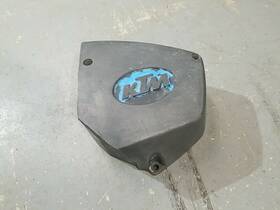
( Manufacturer Part Number: 51.30.002.010 ), ( Part Type: Ignition Cover Engine Motor Case ), ( Stock Location: Wh 2 Box 163 Item 21606 Ai ), ( Vintage Part: Yes ), ( Compatible Year: 1973, 1974, 1975, 1976 ), ( Country Of Origin: Italy )
Review KTM 5130002010 Penton Engine Motor Ignition Case Cover fits KTM250 250 1973–1975
The **KTM 51.30.002.010 (5130002010) Engine Motor Ignition Cover** from the 1973 1975 Penton 250 series is a meticulously crafted, high-performance component designed to protect and enhance the reliability of the iconic KTM 250 twin-cylinder air-cooled engine. This ignition cover, also commonly referred to as the cylinder head cover or valve cover, is a critical part of the motorcycle s powerplant, housing the ignition system, camshaft, and associated mechanical components while ensuring optimal airflow and thermal management. Crafted from durable die-cast aluminum, this cover is engineered to withstand the rigorous demands of off-road and street riding, offering both structural integrity and lightweight efficiency. Its precise fitment ensures a secure seal, preventing oil leaks and maintaining engine cleanliness, which is essential for the longevity of the Penton s reliable yet high-revving twin-cylinder motor.
The design of this ignition cover reflects the engineering philosophy of KTM s early off-road motorcycles, balancing simplicity with performance. The cover features a clean, functional aesthetic with integrated mounting points for the ignition system, including the points or electronic ignition components depending on the model year, as well as the camshaft housing. The outer surface is typically smooth and polished, allowing for easy cleaning and maintenance, while the inner chamber is designed to channel heat away from critical components, reducing the risk of overheating during prolonged use. For the 1973 1975 Penton 250, this cover is particularly significant as it plays a vital role in maintaining the engine s peak performance, which was renowned for its smooth power delivery and high-revving characteristics.
Compatibility is a hallmark of this part, as it is specifically tailored to fit the KTM 250 Penton models produced between 1973 and 1975, including variations such as the 250 Penton, 250 Penton 2, and other early iterations of this legendary off-road motorcycle. The part number **51.30.002.010 (5130002010)** ensures an exact match with the original equipment manufacturer (OEM) specifications, making it an ideal replacement for restoration projects or maintenance work. Whether you are restoring a classic Penton to its original glory or upgrading an existing bike, this ignition cover is a must-have component that guarantees both functionality and authenticity.
Beyond its practical benefits, this ignition cover also holds historical significance for enthusiasts of KTM s early off-road motorcycles. The Penton 250 series was a pioneering model in KTM s evolution, blending rugged durability with innovative engineering that set the stage for future generations of KTM bikes. By installing this genuine OEM part, riders and collectors can preserve the integrity of their motorcycle s heritage while ensuring that it operates at its best. The cover s precise fitment and high-quality construction make it a reliable choice for those who demand nothing less than perfection in their restoration or maintenance efforts. Whether you are a seasoned mechanic or a passionate collector, this ignition cover is an essential addition to your toolkit, ensuring that your Penton 250 continues to deliver the thrilling performance it was originally designed for.
### **Overview of the KTM 250 Penton Engine (1973 1975 Model, Part Number 5130002010)**
The **KTM 250 Penton** engine (specifically the **51.30.002.010** or **5130002010** ignition cover variant from 1973 1975) is a classic air-cooled, two-stroke single-cylinder powerplant known for its simplicity, durability, and off-road capabilities. Below is a detailed breakdown of its **pros and cons**, followed by a **conclusion and recommendation**.
---
### **Pros of the KTM 250 Penton Engine**
1. **Proven Reliability and Durability**
- The Penton engine was designed for rugged use, particularly in motocross and enduro. Many units have lasted decades with proper maintenance, especially when rebuilt or restored.
- The two-stroke design is inherently simple, with fewer moving parts than four-stroke engines, reducing potential failure points.
2. **Off-Road Performance**
- The engine was built for high-revving, high-torque applications, making it well-suited for dirt bikes, trail bikes, and light off-road use.
- The air-cooled design avoids the complexity of liquid cooling, which is beneficial in dusty or muddy conditions where water cooling systems can clog.
3. **Ease of Maintenance and Repairs**
- Two-stroke engines are easier to service than four-strokes. Components like pistons, crankshafts, and cylinders are straightforward to replace or rebuild.
- Many aftermarket parts and rebuild kits are available, making it easier to keep the engine running.
- The lack of a clutch or complex drivetrain simplifies basic maintenance tasks.
4. **Historical and Collector Value**
- As a classic KTM, the Penton engine holds nostalgia and collector appeal. Restored examples can be valuable, especially in the vintage motorcycle market.
- The engine s rarity (KTM was not a major player in the 1970s) increases its desirability among enthusiasts.
5. **Lightweight and Simple Construction**
- The engine is compact and lightweight, which is advantageous for off-road use where weight matters.
- The minimalist design reduces the risk of catastrophic failure in rough conditions.
6. **Aftermarket Support and Modifications**
- The Penton engine has a dedicated following, with aftermarket companies offering upgrades such as high-performance pistons, crankshafts, and carburetor kits.
- Tuning options (e.g., porting, crankshaft balancing) can improve performance without requiring major overhauls.
7. **Fuel Efficiency (for Its Era)**
- Two-stroke engines are known for their fuel efficiency, especially when run on a proper oil-to-gas ratio. This was particularly useful in the 1970s when fuel economy was a concern.
---
### **Cons of the KTM 250 Penton Engine**
1. **Outdated Technology**
- The engine is **over 50 years old**, meaning it lacks modern emissions standards, fuel injection, and electronic ignition. Modern regulations (e.g., Euro 5) would make it illegal to ride in many countries without significant modifications.
- The carbureted system is less precise than modern fuel injection, leading to inconsistent performance under varying conditions.
2. **High Maintenance Requirements**
- Two-stroke engines require **frequent oil mixing** (typically 50:1 oil-to-gas ratio) and regular cleaning of the crankcase to prevent sludge buildup.
- The lack of a wet sump means oil must be drained and replaced more often than in four-stroke engines.
- The ignition system (points or early electronic ignition) can wear out quickly, requiring frequent adjustments or replacements.
3. **Noise and Pollution**
- Two-stroke engines are **loud** and produce significant exhaust emissions, making them unsuitable for street use in most modern jurisdictions.
- The lack of catalytic converters or air filters means they contribute more to air pollution than modern bikes.
4. **Limited Power and Efficiency**
- By today s standards, the Penton engine is **underpowered**. Modern 250cc bikes (even two-strokes) produce significantly more horsepower and torque.
- The engine s simplicity comes at the cost of efficiency modern engines recover more energy and run cooler.
5. **Difficulty Finding Original Parts**
- While aftermarket parts exist, **original KTM parts for this era are scarce**. Finding OEM components (e.g., original carburetors, ignition covers, or seals) can be challenging and expensive.
- The engine s age means some parts may no longer be manufactured, requiring custom machining or 3D-printed replacements.
6. **Rust and Corrosion Risks**
- Older engines, especially those stored improperly, are prone to **rust and corrosion**. The crankcase, cylinder, and ignition components may require extensive cleaning or replacement.
- The lack of modern coatings or corrosion-resistant materials means the engine may deteriorate faster if not well-maintained.
7. **Legal and Insurance Restrictions**
- Many countries **ban or restrict** the use of two-stroke motorcycles on public roads due to emissions. Even if legal, insuring a vintage bike with an outdated engine can be difficult and expensive.
- Some insurance providers may classify the bike as a "classic" only if it meets modern safety standards, which this engine does not.
8. **Skill and Expertise Required**
- Working on a 1970s KTM requires **mechanical knowledge** of older engine designs. Modern mechanics may not be familiar with two-stroke tuning, porting, or traditional ignition systems.
- Restoring the engine to reliable condition often requires **time, patience, and specialized tools**.
9. **Resale Value and Depreciation**
- While some restored examples hold value, most KTM 250s from this era **depreciate quickly** unless they are rare or in pristine condition.
- The engine s age and lack of modern features make it less attractive to casual buyers compared to newer or more common bikes.
10. **Environmental Concerns**
- Two-stroke engines are **less environmentally friendly** than modern four-strokes, even with modern oil formulations. This can be a dealbreaker for eco-conscious buyers.
---
### **Conclusion**
The **KTM 250 Penton engine (1973 1975)** is a **fantastic choice for enthusiasts, collectors, or off-road purists** who prioritize nostalgia, simplicity, and mechanical challenge. Its **durability, ease of repair, and historical significance** make it a rewarding project for those willing to invest time and effort. However, for **practical, daily, or modern-use applications**, the engine s **outdated technology, emissions issues, and high maintenance demands** make it impractical.
If you are considering this engine, your decision should hinge on whether you are:- **Restoring a classic bike for display or track use** (where emissions and noise are not concerns).
- **Building a custom off-road bike** where simplicity and ruggedness are valued over modern convenience.
- **A mechanical enthusiast** who enjoys working on vintage machinery.
If, on the other hand, you seek **a reliable, legal-to-ride, low-maintenance bike**, a modern 250cc two-stroke (e.g., Honda CRF250L, Yamaha TT-R230) or a four-stroke (e.g., KTM 250 XC-F) would be a far better choice.
---
### **Recommendation**
1. **If You Want to Buy This Engine:**- **Assess its condition thoroughly** look for rust, wear on the crankshaft, and cylinder integrity. A **full rebuild** may be necessary.
- **Budget for restoration** expect to spend **$1,000 $3,000 ** on parts, labor, and potential modifications to make it road-legal or reliable.
- **Consider a project bike** if you re not committed to restoring it, the cost may outweigh the enjoyment.
- **Check local laws** ensure the bike can be registered or used legally in your area, or plan to use it **off-road only**.
2. **If You re Unsure:**- **Test the engine on a dynamometer** if possible to verify its condition and power output.
- **Consult a KTM specialist** some mechanics have experience with vintage KTM engines and can provide honest advice on feasibility.
- **Explore alternatives** modern 250cc two-strokes (e.g., Honda CRF250L) or four-strokes (e.g., KTM 250 XC-F) offer better performance, reliability, and legality for modern use.
3. **Best Use Cases:**- **Static display or museum piece** (if fully restored).
- **Track day or enduro bike** (if modified for emissions and noise).
- **Mechanical learning project** (for those interested in vintage engine work).
4. **Avoid If:**- You need a **daily commuter or street-legal bike**.
- You lack **time, patience, or mechanical skills** for restoration.
- You prioritize **modern convenience, emissions compliance, or low maintenance**.
---
### **Final Verdict**
The **KTM 2
Details:
Has bottom piece cut off missing and chip in top back corner, no cracks otherwise. 1973 Ktm penton engine right side cover ignition. Gasket surface smooth. Corrosion/scratches/nicks throughout.
part #: 5130002010 prices
- $70.00-$144.99
specifications cyclevintagee:
- for models: Ktm250, 250
- for makes: Ktm
- for years: 1973-1975
- mpn: 51.30.002.010
- part type: Ignition Cover Engine Motor Case
- stock location: Wh 2 Box 163 Item 21606 Ai
- vintage part: Yes
- compatible year: 1973, 1974, 1975, 1976
- country of origin: Italy
offer cyclevintagee:
- availability: In Stock
- sold: 0
- options: Ship-to-home
- started: April 6, 2026
- quantity: 1
returns cyclevintagee:
- policy: No Returns
seller cyclevintagee:
- rating: 99.7%
- city: Tyngsboro, Massachusetts
- # reviews: 2650
general cyclevintagee:
- condition: Used
- Parts Accessories > Motorcycle Scooter Parts Accessories > Other Motorcycle Scooter Parts Accessories
shipping cyclevintagee:
- type: Calculated
- cost: $10.33
- class: Standard, Expedited
- service: USPS Ground Advantage, USPS Priority Mail
- transit: 4-8 Days
- carrier: USPS
payments cyclevintagee:
- wallet: Apple-pay
- other
- credit card: Diners-club
Ktm 51.30.002.010 Is Similar To:
- 52.03.045.000 52.03.145.000 Penton Ktm Jackpiner Frame Reinforcement (27.7% similar) This is a pair of frame reinforcement braces for 1972 penton 175 jacking with the black engine and right no shipping outside USA. The partake left they in excellent undamaged unmodified condition and just need painting...(December 30th, 2016)
- 1-18-18 Bing Penton Ktm Sachs (25.2% similar) Please prior to purchasing discuss these potential charges. Can't find the answer or part you're looking for. Heres how to get hold of a real live person or in number different ways. Crank side is 21MM wrist pin size 14MM, what you see get with this listing perfect for restoration or spare parts, ...(September 27th, 2017)
- 160mm For 1970s Penton Ktm 125 175 250cc Machines Vintage Penton Ktm 125 175 250 Folding Shift Lever Ex Resto E402 (31.4% similar) A great looking solution on offer here. Amp amp store amp b table div amp 1970 S vintage penton ktm 160MM folding shift lever w aftermarket rubber, ex restored E402 this penton ktm parts lot is untested, being offered as is, and consists of these desirable oem and or vintage parts 1 x original ...(December 3rd, 2016)
- 24mm-27mm Bing Nos Lot Penton Ktm Sachs Bmw Zundapp Dkw Montesa Bultaco Ahrma (18% similar) Main jet is. 70, needle jets are vintage being 53 24MM, 26MM, 27MM carburetor parts lot. All parts are new...(March 11th, 2016)
- 51-30-148-000 Penton Vintage Nos Ktm Coupling Hex Nut If You Buy (33.8% similar) Penton, the real thing, no knock-off. Open Tue-sat, 10 AM-6 pm, CST. If you do an internet search by the original part number get nothing...(April 3rd, 2018)
- 56530003300-5653000400 Ktm 1987 Mx350-500 Engine (33.3% similar) The transmission and other parts shown are not included left right engine cases. These are stamped so most likely an 1987 or 1988 model. Fits other years both 350 and series engines. I reserve the right to end offer at anytime. Please verify the serial numbers for other years...(November 14th, 2017)
- 5833010124423 Ktm Clutch Cover Left Smc Sxc (21.1% similar) Grey part group: engine casket 640 adventure year: 2003 part: clutch cover cpl. Grey 03 part group: engine casket 660 supermom factory replica year: 2003 part: clutch cover cpl. Grey 03 with oil inspection glass part group: engine case year: 2004 part: clutch cover cpl. Grey 03 with oil ...(October 19th, 2018)
- 9313 C.e.v For Vintage Penton-era Ktm Isdt Machines 1970s Cev Tipo Tail Light Penton Ktm Isdt Vg Restored E400 (23% similar) Scarce CV Italian stallion, getting harder to find all the time. Note a fine looking piece, but not perfect. 1970 S vintage CV tip tail light for penton ktm STD, VG restored rewired E400 this CV parts lot has been tested, being offered as is, and consists of these desirable oem and or vintage parts...(November 25th, 2016)
- Athena Mn e1ag Complete Gasket Kits For 2008-2010 Ktm 450 Xc-w Engine Gaskets And Eu (29.5% similar) Athena complete gasket kits for 2008 -2010 ktm 450 XC-w - engine gaskets EU: status: in stock...(November 12th, 2023)
- Ktm 55439331000 2017-2022 300 Xcw Cdi Ecu Engine Control Unit Ignition Black Box Computer (49.2% similar) Pulled from 2017 ktm 300XCW tested and functional...(January 7th, 2024)
- Ktm 46239190000eb 2024 50sx Factory Edition Ignition Coil Fe Tc 50 Mc Sx Oem (42.2% similar) Item is in good working condition. 2024 ktm 50SX factory edition ignition coil with 1.3HRS. Shows signs of normal wear...(August 4th, 2024)