YAMAHA 444-15121-01-00 Atm Right Crankcase
fits model: At1, At2, At3, Ct1, Dt125. make: Yamaha. year: 1969-76.
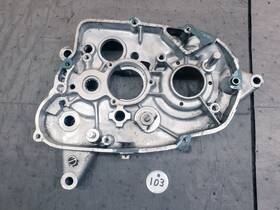
( Vintage Part: Yes ), ( Country Of Origin: Japan ), ( UPC: 444151210100 )
Review YAMAHA Atm Right Side Crankcase fits AT1 AT2 AT3 CT1 DT125 1969-76
The **Yamaha AT1, AT2, AT3, ATM, CT1, and DT125 Right Crankcase (Part #444-15121-01-00)** from the 1969 1976 era represents a rare and highly sought-after component in the world of classic motorcycle restoration and customization. This meticulously crafted crankcase is a key element of Yamaha s early air-cooled, single-cylinder engines, which powered some of the most iconic and influential motorcycles of the 1970s, including the legendary **DT125** and the sporty **AT-series** models. Engineered with precision and designed for durability, this crankcase is forged from high-quality aluminum alloy, featuring a robust, ribbed structure that enhances rigidity while keeping weight to a minimum a hallmark of Yamaha s engineering prowess during this era. The right-hand crankcase is intricately machined to house the crankshaft, connecting rod, and primary drive components, ensuring smooth operation and optimal power transfer. Its compact yet sturdy design reflects Yamaha s commitment to balancing performance with practicality, making it a perfect fit for both street and off-road applications. Whether restoring a vintage DT125 for trail riding or repurposing an AT-series engine for a custom project bike, this crankcase is a testament to Yamaha s early innovation and remains a prized addition for enthusiasts seeking authenticity and reliability. Its historical significance, combined with its functional excellence, makes it an essential part for any collector or builder aiming to recreate the spirit of Yamaha s golden age of motorcycle engineering.
### **Pros and Cons of Buying a 1969 1976 Yamaha AT1/AT2/AT3/ATM/CT1/DT125 with a Right Crankcase (Part # 444-15121-01-00)**
#### **Pros**
1. **Classic Design and Reliability**
- The Yamaha AT series (AT1, AT2, AT3, ATM) and DT125/CT1 are legendary for their simple, durable, and well-engineered designs. These bikes were built to last, with minimal electronic complexity compared to modern motorcycles.
- The right-crankcase (444-15121-01-00) is a common and well-supported part, meaning replacement or repair is straightforward if needed.
2. **Affordability and Low Operating Costs**
- These bikes are inexpensive to purchase, especially in used markets, making them an excellent entry point for riders on a budget.
- Fuel efficiency is excellent expect around **80 100 mpg** for the 125cc models (DT125/CT1) and **60 80 mpg** for the 250cc (AT series).
- Maintenance costs are minimal basic upkeep (oil changes, chain adjustments, valve checks) keeps them running smoothly for decades.
3. **Simplicity and Ease of Repair**
- The engines are straightforward, with few moving parts compared to modern bikes. Many mechanics (and even DIY riders) can handle basic repairs.
- Parts are widely available, especially for the AT series, which was one of Yamaha s most popular models in its time.
- The right-crankcase modification (common on later AT models) improves reliability by reducing oil consumption and improving lubrication.
4. **Nostalgia and Collectibility**
- These bikes hold sentimental value for many riders, especially those who grew up with them or appreciate vintage motorcycle culture.
- Some models (particularly the AT3 and CT1) are sought after by collectors, which can increase resale value over time.
5. **Versatility and Practicality**
- The AT series was designed as a **touring bike**, meaning it has a comfortable seat, decent wind protection (on later models), and a practical storage area.
- The DT125/CT1 is a lightweight, nimble bike ideal for city riding, commuting, or light off-road use.
- Both can be easily modified for different riding styles (e.g., adding a windscreen, upgrading the exhaust, or swapping the seat).
6. **Proven Longevity**
- Many of these bikes still run strong after **40 years**, with proper maintenance. Some AT models have been restored and ridden for decades with minimal issues.
- The right-crankcase upgrade (if originally fitted) reduces oil leaks and improves engine longevity.
7. **Great for Learning or Secondary Bike**
- The AT series is a **heavy bike** (around **200 220 lbs**), making it stable for new riders who want a more substantial machine than a 125cc.
- The DT125/CT1 is lightweight and easy to handle, making it ideal for beginners or as a secondary bike.
---
#### **Cons**
1. **Age-Related Wear and Tear**
- Even with good maintenance, **30 50-year-old bikes will show signs of aging**, such as:- **Rust** (especially in the frame, forks, or exhaust).
- **Worn-out suspension** (shock absorbers and forks may need replacement).
- **Brakes** (drum brakes on older models are less effective; some may need upgrades to discs).
- **Tires** (original rubber is long past its prime; modern tires are safer and more efficient).
- **Electrical issues** (weak batteries, corroded connections, or failing lights) are common and may require restoration.
2. **Limited Modern Safety Features**
- **No ABS** (anti-lock braking system), which is a **major safety concern**, especially for city riding.
- **Basic lighting** (some models have weak or flickering headlights).
- **Poor visibility** (especially on the AT series, which lacks modern fairings or wind protection).
- **No traction control or modern stability aids** (modern bikes have electronics that help prevent skids).
3. **Comfort and Ergonomics**
- The **AT series is heavy and tall**, which can be uncomfortable for shorter riders or those with back issues.
- **Seat comfort** varies some are hard and thin, while others (like the ATM) have slightly better padding.
- **Wind noise and exposure** are significant, especially at highway speeds, making long rides less pleasant than on modern bikes.
4. **Fuel and Emissions Compliance**
- **Modern fuel (higher octane, ethanol blends) can cause issues** with carbureted engines, leading to rough running or poor performance.
- **Emissions standards** mean these bikes **cannot be legally ridden in many places** without modifications (e.g., installing a catalytic converter or switching to a cleaner fuel system).
- Some states or countries **ban or restrict** the use of pre-1975 bikes due to pollution concerns.
5. **Parts Availability and Scarcity**
- While **common parts** (like the right crankcase) are easy to find, **rare or discontinued components** (e.g., specific gaskets, seals, or carburetor parts) may require sourcing from collectors or eBay.
- **OEM (original equipment manufacturer) parts** are becoming harder to find many riders rely on aftermarket or rebuilt components.
6. **Performance Limitations**
- **Power output is low by modern standards** the DT125 makes ** 8 10 hp**, while the AT series (250cc) makes ** 15 20 hp**.
- **Top speed is limited** (around **60 70 mph** for the AT series, **50 60 mph** for the DT125), making highway riding slow and tiring.
- **Acceleration is sluggish**, especially in traffic, compared to modern bikes.
7. **Resale Value**
- While some **well-maintained, restored, or rare models** hold value, most **average-condition AT/DT bikes depreciate quickly** because they are not practical for daily use in modern traffic.
- **Insurance costs** may be higher due to age and lack of modern safety features.
8. **Maintenance Requirements**
- **Regular upkeep is essential** these bikes **will not run well with neglect**.
- **Valvetrain adjustments** (on the AT series) must be done every **1,000 2,000 miles** to prevent wear.
- **Carburetor tuning** can be finicky, especially with modern fuel.
- **Chain and sprocket wear** is common and requires frequent checks.
---
### **Conclusion**
Buying a **1969 1976 Yamaha AT1/AT2/AT3/ATM/CT1/DT125 with a right crankcase** can be a **fantastic choice** if you:- **Appreciate vintage motorcycles** and don t mind their limitations.
- **Have a budget-friendly approach** to riding (low purchase price, cheap maintenance).
- **Plan to restore and maintain the bike** rather than use it as a daily commuter.
- **Ride mostly for fun, nostalgia, or light off-road use** rather than high-speed touring.
- **Are okay with manual adjustments, occasional repairs, and lack of modern conveniences.**
However, if you:- **Need a practical, safe, and reliable bike for daily commuting or highway riding**, a modern bike (even a used one) would be a **far better choice**.
- **Want ABS, better brakes, and modern safety features**, a vintage bike will fall short.
- **Don t enjoy tinkering with carburetors, valves, or electrical systems**, the maintenance burden may be too much.
- **Live in an area with strict emissions laws**, you may face legal or insurance issues.
---
### **Recommendation**
#### **Buy It If:**You are a **restorer or enthusiast** who enjoys bringing vintage bikes back to life.
You **don t mind slow speeds, manual adjustments, and occasional repairs** in exchange for low cost.
You **plan to ride it lightly** (weekend cruising, track days, or as a secondary bike).
You **have mechanical skills** (or access to a good mechanic) to keep it running.
You **don t need it for daily commuting** these bikes are **not practical** for modern traffic.
#### **Avoid It If:**You **need a reliable, safe, and fast** bike for daily use.
You **can t commit to regular maintenance** (oil changes, valve adjustments, carburetor tuning).
You **live in an area with strict emissions laws** (some states ban pre-1975 bikes).
You **prefer modern conveniences** (ABS, disc brakes, comfortable ergonomics).
You **don t enjoy the idea of a heavy, slow, and somewhat impractical ride**.
#### **Best Alternatives:** - **For a budget-friendly, modern bike:**Details:
FITMENT: AT1B - 1970 AT1C 1971 AT1E 1969 AT1M AT1MX AT2M 1972 AT3 CT3 AT2 1973 CT2 ATM1B ATMX CT1 CT1B CT1C DT125A 1974 DT125B 1975 DT125C 1976. CAME OFF A 1974 YAMAHA DT125 ENGINE# 444-109104 PLEASE SEE PICTURES FOR CONDITION AND WHATS INCLUDED.
part #: 444151210100 prices
- $25.00-$119.99
specifications cyclevintagee:
- for models: At1, At2, At3, Ct1, Dt125
- for makes: Yamaha
- for years: 1969-76
- vintage part: Yes
- country of origin: Japan
- upc: 444151210100
general cyclevintagee:
- condition: Used
- Parts Accessories > Motorcycle Scooter Parts Accessories > Other Motorcycle Scooter Parts Accessories
offer cyclevintagee:
- availability: In Stock
- started: February 19, 2026
- quantity: 1
- sold: 0
- best offers: True
- options: Ship-to-home
shipping cyclevintagee:
- class: Standard
- cost: $0.00
- type: Calculated
- transit: 2-6 Days
- carrier: USPS
- service: USPS Ground Advantage
seller cyclevintagee:
- # reviews: 2838
- rating: 100.0%
- city: Spokane, Washington
payments cyclevintagee:
- wallet: Google-pay
- credit card: Mastercard
- other
returns cyclevintagee:
- policy: Returns Accepted
- time: 30 Days
- paid by: Buyer
Yamaha 444-15121-01-00 Is Similar To:
- 1 5vy-26290-00-00 Yamaha Nos Rear View Mirror Assy Right (24.1% similar) This mirror came off of my r1 that fell over inside a trailer when it was being strapped down. This has been sitting in a box my garage for about 8 years now. This part is used and it only scuffed. Please see my other parts for this bike that I have sale as well...(May 9th, 2018)
- 122-15411-00-00 Yamaha Yg1 Left Crankcase (33.9% similar) Yamaha YGS1 1966 , YG1F, YG1F-D 1969 nos...(December 25th, 2017)
- 14t-21714-00-00 Yamaha Nos Side Cover (26.3% similar) ...(November 14th, 2017)
- 156-15415-00 Yamaha Nos Crankcase Cover (29.3% similar) New old stock. Has some shelf wear,light scratches. Look at pictures closely...(January 25th, 2018)
- Rd350lc Yamaha Rz350 1983-1985 Right Handle Switch (39.4% similar) Shipping is at cost and I don't overcharge ,shipping in Canada is this part is in good condition and just need paint, throttle tube is not split and connectors are good. Yamaha RZ350 RD350LC right switch block with throttle for model's...(March 5th, 2016)
- 1g1-21711-00-00 Yamaha Side Number Plate Left Ahrma Vintage (19.1% similar) Used TT500 left number plate usable condition no hardware sun faded see pictures...(April 30th, 2018)
- 1lx-15111-12-00 Yamaha Crankcase Used Part (26.9% similar) No longer available from yamaha. Very hard to find. Check all photos to make sure this is the correct item and that you are happy with condition. Remember this is a 28 yr old part, and will have age related marks. Yamaha YZ125 used crank case original condition part, has some marks wear nothing ...(June 25th, 2018)
- 1t2-21721-00-00 Yamaha Right Side Body Frame Cover Panel Xt Enduro Oem (28.6% similar) Any questions. No cracks or breaks. They may not be clean. Not looking at the pictures, reading. Shipping domestic. Please look at all the pictures and read whole. They may need some repairs. We answer all questions. Yamaha right side COVERXT500 1977 cover is in used condition. Not asking ...(October 16th, 2018)
- 248-15111-02-00 Yamaha Vintage Lh Crankcase (33.3% similar) Return:altered, abused, or improperly installed maintained items are not returnable. Washington sports inc. If unsure check part number fitment with a dealer before buying. Your local bad boy mower dealer...(February 1st, 2018)
- Xs650 256-15451-00 Nos New Yamaha Xs1 Xs2 Tx650 Right Crank Case Clutch Cover Gasket (33.5% similar) Up for offer is a nos new old stock yamaha XS1 XS2 XS650 TX650 right crank case clutch cover gasket. This part does not include the original packaging. Please see chart in pictures for correct model application...(November 1st, 2016)
- Tx650 256-27421-00 Nos 1970-73 Yamaha Xs1 Right Footpeg Bracket Xs2 (29.2% similar) Up for sale is a new old stock right foot peg bracket for your yamaha XS1, 1972 XS2 and 1973 TX650. Approx shipping weight when boxed is 2LBS...(May 31st, 2016)