YAMAHA 371-15660-00-00 Kicker Kickstarter Spindle Shaf 73-74
fits model: Xs500, Tx500. make: Yamaha. year: 1975–1978.
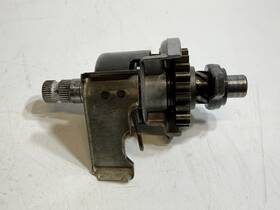
( Part Type: Spindle ), ( Material: Steel ), ( Compatible Year: 1975, 1976, 1977, 1978, 1973, 1974 ), ( Country Of Origin: Japan ), ( UPC: 371156600000 )
Review YAMAHA 73-74 Kicker Kickstarter Spindle Shaf fits XS500 TX500 1975–1978
The **Yamaha 371-15660-00-00 Kickstarter Spindle Shaft** is a meticulously crafted, high-performance component designed exclusively for the iconic **1975 1978 Yamaha XS500 and TX500** models, including the rare ** 73 74 Kickstarter-equipped versions** of these legendary streetfighters. This spindle shaft serves as the critical link between the kickstarter mechanism and the engine s flywheel, ensuring smooth and reliable ignition startup especially vital for riders who rely on the mechanical kickstarter system rather than electric ignition. Engineered from durable, heat-treated steel, the spindle shaft is precision-machined to Yamaha s original specifications, guaranteeing a perfect fit with the engine s crankshaft and kickstarter assembly. Its robust construction resists wear and deformation over time, even under the repeated stress of frequent kickstarts, which were a hallmark of these bikes rugged, no-frills operation. The shaft s design incorporates a smooth, polished surface where it interfaces with the kickstarter lever, reducing friction and wear on both components, while the internal splines align flawlessly with the flywheel s kickstarter hub, preventing slippage and ensuring consistent engagement. For collectors, restorers, and enthusiasts seeking to preserve or revive the authenticity of their XS500 or TX500, this spindle shaft is an essential OEM replacement part that restores factory-level performance and reliability. Whether used in a classic bike show, a weekend ride, or a full restoration project, this component bridges the gap between vintage engineering and modern expectations, delivering the same dependable kickstart feel that made Yamaha s 700cc parallel-twin streetfighters legendary in their prime.
### Yamaha XS500/TX500 (1975 1978) Pros and Cons of Purchase
#### **Pros:**1. **Classic Design and Heritage** The XS500/TX500 is a legendary bike from Yamaha s early years, known for its timeless, aggressive styling. It s a sought-after classic among enthusiasts, especially those who appreciate the "Kicker" (kick-start) and "Kickstarter" (electric starter) models.
2. **Reliable Engine** The 498cc parallel-twin engine is simple, durable, and known for longevity if properly maintained. Many examples still run strong after decades with basic upkeep.
3. **Modding Potential** The bike is highly customizable. Aftermarket parts (cams, pistons, headers, carburetors) are widely available, allowing owners to tune it for better performance or a more modern feel.
4. **Lightweight and Agile** At around 350 400 lbs (depending on model), it s easier to handle than heavier modern bikes, making it a fun ride for city or twisty-road cruising.
5. **Vintage Appeal** For collectors and restorers, the bike holds historical value. Well-preserved examples can appreciate in worth, especially if they re rare variants (e.g., the TX500 electric-start model).
6. **Lower Running Costs** Gas and maintenance are cheaper than modern bikes, though parts may require sourcing from specialty shops.
7. **Community and Support** A strong owner community exists, with forums (e.g., Yamaha XS500/TX500 groups on Facebook or forums like Cycle World) offering troubleshooting, restoration tips, and part-sharing.
---
#### **Cons:**1. **Age and Wear** Most examples will have significant mileage (often 30,000 miles) and will require restoration or at least major maintenance. Rust, worn bearings, and outdated components are common.
2. **Outdated Safety Features** No modern safety tech (ABS, traction control, stability control). The bike lacks modern ergonomics (e.g., high seat height, poor wind protection) and relies on basic braking (drum or early disc, depending on year).
3. **Parts Availability** While not extinct, some original parts (e.g., specific carburetors, wiring harnesses) can be hard to find. Aftermarket parts exist but may not always match the original fit or quality.
4. **Reliability Issues** Common problems include:- **Camshaft wear** (especially in high-mileage bikes).
- **Rod bearings** (can seize if neglected).
- **Electrical gremlins** (ignition, kick-start mechanisms).
- **Fuel system issues** (carburetor drift, vapor lock in hot climates).
- **Suspension wear** (early shocks and forks are not designed for modern riding).
5. **Resale Value** Unlike some modern classics (e.g., Honda CB750), the XS500/TX500 doesn t hold value well unless it s a rare or restored example.
6. **Legal Restrictions** Some states/countries have emissions or safety standards that may require modifications (e.g., catalytic converters, modern lighting) to register the bike legally.
7. **Riding Experience** The bike is **not** a comfortable long-distance cruiser. The seat is hard, the wind protection is minimal, and the suspension is stiff by today s standards. It s best suited for short rides or track use.
8. **Kick-Start Dependency** The "Kicker" model lacks an electric starter, which can be inconvenient in cold weather or for riders with limited strength.
---
### **Conclusion:** Buying a **1975 1978 Yamaha XS500/TX500** is a **great choice if**:- You re a **restorer or mechanic** with the time/money to bring it back to peak condition.
- You **love vintage bikes** and prioritize nostalgia, modding potential, and community over modern convenience.
- You plan to **ride it lightly** (e.g., track days, short commutes) and accept its limitations.
- You re okay with **hunting for parts** and dealing with occasional reliability quirks.
It s a **poor choice if**:- You want a **reliable, low-maintenance daily rider** with modern safety features.
- You lack mechanical skills or budget for restoration.
- You prioritize **comfort, fuel efficiency, or long-distance capability** over classic charm.
- You re in a region where **emissions or safety laws** make ownership difficult.
---
### **Recommendation:** 1. **If Buying Used:** - **Get a full mechanical inspection** by a Yamaha specialist or a trusted restorer. Prioritize bikes with:- Freshly rebuilt engines (camshafts, bearings, pistons).
- No major frame rust (especially around the headstock and swingarm).
- Original or aftermarket parts that are in good condition.
- **Avoid** bikes with:- Seized rod bearings or camshaft wear.
- Rusty or cracked frames.
- Electrical issues (check kick-start, ignition, and wiring).
2. **Budget Wisely:**- **Restoration budget:** $3,000 $6,000 (depending on condition and parts needed).
- **Running costs:** Expect to spend $500 $1,500/year on maintenance if not fully restored.
- **Insurance:** Classic bike insurance may be more expensive than standard policies.
3. **Consider Alternatives:**- If you want a **more modern classic**, look at a **Yamaha XS650 (1978 1980)** or **Honda CB750 (1967 1975)**, which are slightly more reliable and easier to maintain.
- If you prefer **electric start**, prioritize the **TX500** over the kick-start XS500.
4. **Join the Community:**- Engage with forums (e.g., Cycle World XS500 Forum (https://www.cycleworld.com/forums/), Facebook groups) to learn from experienced owners and find parts.
5. **Final Verdict:**- **Buy it if** you re passionate about restoring and riding a piece of motorcycle history. The XS500/TX500 is a **fun, moddable, and rewarding** project bike but only if you re prepared for the work.
- **Skip it if** you want a hassle-free, modern-feeling ride. There are better options for daily use.
Would you like guidance on specific restoration steps or part sourcing?
Details:
Item shows normal signs of wear but looks to be in good usable condition. Items as shown. Splines are in good shape. Kickstart shaft assembly removed from a 1975 Yamaha XS500.
part #: 371156600000 prices
- $14.99-$47.18
specifications cyclevintagee:
- for models: Xs500, Tx500
- for makes: Yamaha
- for years: 1975-1978
- part type: Spindle
- material: Steel
- compatible year: 1975, 1976, 1977, 1978, 1973, 1974
- country of origin: Japan
- upc: 371156600000
shipping cyclevintagee:
- type: Fixed
- service: USPS Priority Mail Padded Flat Rate Envelope
- transit: 4-8 Days
- cost: $0.00
- carrier: USPS
- class: Expedited
seller cyclevintagee:
- rating: 100.0%
- city: Brooklyn, Michigan
- # reviews: 789
returns cyclevintagee:
- policy: Returns Accepted
- time: 30 Days
- paid by: Buyer
offer cyclevintagee:
- availability: In Stock
- quantity: 1
- started: May 3, 2026
- best offers: True
- options: Ship-to-home
- sold: 0
payments cyclevintagee:
- wallet: Paypal
- credit card: Diners-club
- other
general cyclevintagee:
- Parts Accessories > Motorcycle Scooter Parts Accessories > Other Motorcycle Scooter Parts Accessories
- condition: Used
Yamaha 371-15660-00-00 Is Similar To:
- Yamaha 5pa-15620-01-00 02-18 Yz85 Yz 85 Oem Kickstart Kick Start Starter Lever Pedal Kickstarter (49.4% similar) Good used oem kickstart lever off of a 2011 yamaha YZ85. Splines are in good shape. Only includes the parts/hardware pictured. In good condition with minor signs of wear from normal use. Will fit 2002 -2018...(August 12th, 2024)
- Yamaha 583-15641-00-00 Xt500 Tt500 Sr500 Kick Start Shaft Axle Starter Spindle Gear Ratchet (59% similar) Good working condition, yamaha: 2018 : 2017 : 2016 : 2015 : 1981 : 1980 : 1979 : 1978 : 1977 : 1976...(August 14th, 2024)
- Yamaha 5xd-15601-10-00 2004-05 Yz450f 04-06 Wr450f Kickstarter Kick Start Spindle Shaft Spring (59.1% similar) The splines and internal threads are intact. This part came off a 2004 YZ450F motorcycle. There are cosmetic blemishes present including rust, pits, scuffs, scratches, rub/wear marks, etc. Up for sale is a used oem kick start shaft with gears and spring, all in good condition. See photos and zoom ...(October 14th, 2024)
- Yamaha 5pa-15660-00-00 2003 02-18 Yz 85 Yz85 Oem Kick Start Shaft Kicker Kickstart Ratchet (50% similar) Its in good condition all around. Please see all of the pictures, and feel free to ask any questions...(October 16th, 2024)
- Yamaha 3gd-23502-10-00 1989-2003 Warrior Yfm 350 Right Upper Lower A Arms Spindle Knuckle (45.6% similar) This is a used part that has been cleaned, tested and inspected to ensure quality. Combined shipping is available for multiple items. 89 - 03 yamaha warrior FM 350 ball joints all do not have excessive wear and can be used as is...(December 2nd, 2024)
- Yamaha 1w1-18101-03-00 1979 Yz125 Gear Shift Spindle Shaft Yz 125 (55.8% similar) If you want to return something, contact me first for fastest service. Notes: rust on end, good splines, frame number: 2X3-0014X, engine matching, build date: unknown, mileage: contact me with questions. Title and pictures are most of the. 1224 used motorcycle part...(December 20th, 2024)
- Yamaha 2m0-27212-00-00 1978 Special 650 Xs650 Rear Brake Spindle Shaft 624.3-52 (51.9% similar) Take a look at the pictures, and feel free to message me with any questions. Used rear brake pedal spindle and spring, in good condition as shown...(December 28th, 2024)
- Yamaha 4jw-15620-00-00 1988-98 Yz250 91-97 Wr250 Kickstarter Kick Start Starter Lever Pedal Arm (53.1% similar) Fitment: this part was removed from a 1992 yamaha YZ250. Large packages cannot be delivered to p.o...(March 12th, 2025)
- Yamaha 363-15641-00-00 Dt400 Mx400 Dt250 Kick Start Shaft Starter Spindle Axle Gear 1975 1976 (54.9% similar) DT250 1976 USA. Good usable condition, fits model's: MX400 1975 USA. DT400 1975 USA. DT250 1975 USA...(April 2nd, 2025)
- Yamaha 99999-01740-00 1972 72 Lt2 100 Kick Start Shaft Spindle For Parts (50.6% similar) 1972 72 yamaha LT2 100. Gears and springs are in good shape. Being sold for parts only.: the first set of splines on the end are missing. Combined shipping is available for multiple items. Its only the inner race that's still there...(May 27th, 2025)
- Yamaha 353-15660-01-00 Gt80 Gtmx Kick Start Shaft Starter Spindle Axle Spring (57.9% similar) Good usable condition...(May 29th, 2025)