YAMAHA 260-83371-12-00 Horn Dt
fits model: Dt125, Dt250, Dt400. make: Yamaha. year: 1977–1978.
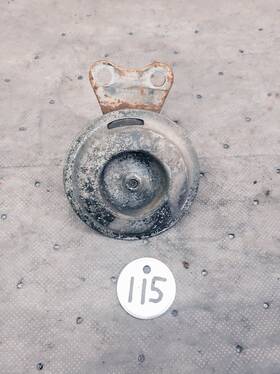
( Part Type: Horn ), ( Vintage Part: Yes ), ( Country Of Origin: Japan ), ( UPC: 260833711200 )
Review YAMAHA Oem Horn Dt Tested Good fits DT125 DT250 DT400 1977–1978
The **Yamaha DT125, DT250, and DT400 Horn (Model 260-83371-12-00, produced for the 1977 and 1978 model years)** represents a rare and highly sought-after piece of vintage motorcycle history, embodying the raw, unrefined spirit of Yamaha s early off-road dominance. This iconic horn, designed specifically for the legendary DT-series dual-sport motorcycles, is a functional yet nostalgic artifact that harks back to an era when adventure riding was defined by simplicity, durability, and a deep connection to the open road. Crafted with the same engineering precision that made Yamaha s dual-sports legendary, this horn is a compact yet robust component, likely constructed from die-cast zinc alloy or heavy-duty metal to withstand the rigors of both on-road and off-road use. Its sleek, angular design characteristic of Yamaha s mid-1970s aesthetic features a smooth, slightly tapered body with a minimalist button or lever mechanism, ensuring ease of operation while maintaining a clean, uncluttered appearance. The horn s placement on the handlebar or fairing would have been strategic, allowing riders to signal without diverting their attention from the trail, a practical consideration that reflects Yamaha s focus on functionality in its early off-road machinery. As a piece of automotive history, this horn is not merely a replacement part but a tangible link to a time when dual-sports were still evolving, blending the agility of a dirt bike with the versatility of a road-going machine. Collectors and restorers of vintage Yamaha DT-series motorcycles prize this component for its authenticity, as it was originally fitted to models like the DT125 (the lightweight, nimble entry into the series), the DT250 (a balanced all-rounder favored by both enthusiasts and professionals), and the DT400 (the larger, more powerful sibling designed for demanding terrain). The 1977 and 1978 production years mark a transitional period in Yamaha s off-road history, where the company was refining its dual-sport lineup before the introduction of more advanced models in the late '70s. Owning or restoring this horn allows enthusiasts to preserve a piece of that transitional era, ensuring that the legacy of Yamaha s early off-road innovations lives on. Whether installed on a fully restored classic or as a standalone collectible, this horn is a testament to Yamaha s early commitment to adventure riding, offering both functionality and a deep sense of nostalgia for those who appreciate the golden age of dual-sport motorcycles.
### Yamaha DT125, DT250, and DT400 (1977-1978 Models) Pros and Cons
#### **Overview**
The Yamaha DT series (DT125, DT250, DT400) from 1977-1978 are iconic dual-sport motorcycles known for their simplicity, reliability, and off-road capability. These bikes were designed for adventure, military use, and general utility, making them versatile machines. Below is a detailed breakdown of their strengths and weaknesses.
---
### **Pros**
1. **Proven Reliability and Durability**
- The DT series is legendary for its robustness. Built with minimal frills, these bikes were designed to withstand harsh conditions, making them highly durable even after decades of use.
- The air-cooled, single-cylinder engines (with the exception of the DT400, which has a twin-cylinder) are simple and easy to maintain, with few complex components prone to failure.
- Many DT125s and DT250s are still running strong today with relatively minor modifications, proving their longevity.
2. **Off-Road Capability**
- The DT series was engineered for off-road use, featuring a long-travel suspension (especially the DT400), knobby tires, and a low seat height, making them excellent for trails, dirt roads, and light overlanding.
- The DT125 and DT250 are lightweight and nimble, ideal for technical terrain, while the DT400 offers more power and stability for longer rides.
- The absence of a fairing or windscreen means these bikes are well-suited for dusty or rugged environments where aerodynamics are less critical.
3. **Simplicity and Ease of Maintenance**
- The bikes have straightforward mechanical designs, with easily accessible components. Owners can perform basic maintenance (oil changes, chain adjustments, spark plug replacements) without specialized tools or expertise.
- Parts are widely available, especially for the DT125 and DT250, due to their popularity and longevity. The DT400, while less common, still has a dedicated parts market.
- No complex electronics or fuel injection; carburetions (Pike or Dell Orto) are easy to tune and replace.
4. **Versatility**
- These bikes can handle a variety of roles: commuting, touring, off-roading, or even as a side-by-side for two people (though not comfortably for long distances).
- The DT125 and DT250 are small enough to be practical for urban use, while the DT400 offers more power for highway stability.
- The absence of a gearbox shift lever (the DT125 and DT250 use a twist-grip throttle with a clutch lever, while the DT400 has a traditional shifter) makes them intuitive for some riders.
5. **Historical and Nostalgic Appeal**
- The DT series holds a special place in motorcycle history, particularly among enthusiasts who appreciate classic designs. Owning one can be a point of pride for collectors and riders who value heritage.
- The bikes have a cult following, leading to a strong community of owners who share tips, modifications, and restoration advice.
6. **Cost-Effective**
- Purchasing a used DT125, DT250, or DT400 from the 1970s is relatively affordable compared to modern dual-sports or adventure bikes. Even well-maintained examples can be found for a few thousand dollars.
- Fuel efficiency is excellent, especially for the smaller models. The DT125 gets around 100 miles per gallon, while the DT250 and DT400 are more efficient than many modern bikes of similar power.
- Insurance and registration costs are typically lower than for modern sport or touring bikes.
7. **Modification Potential**
- The DT series is highly modifiable. Riders can upgrade components such as suspension (e.g., adding rear shocks for the DT125), tires, handlebars, seats, and exhaust systems to improve performance or comfort.
- Engine modifications (e.g., porting, crankshaft upgrades) can increase power, though this is more common with the DT250 and DT400.
- Custom paint jobs and aesthetic upgrades are popular among owners who want to personalize their bikes.
8. **Lightweight and Maneuverable**
- The DT125 and DT250 are extremely lightweight, making them easy to handle, park, and transport. The DT400 is heavier but still manageable for most riders.
- The bikes are agile on tight trails and in urban environments, appealing to riders who value agility over power.
9. **Minimalist Design**
- The stripped-down design means there are fewer components to fail. No complex electronics, minimal wiring, and no hydraulic systems (e.g., no ABS or modern braking systems) reduce the risk of unexpected breakdowns.
- The simplicity also translates to easier repairs and troubleshooting.
10. **Global Popularity and Accessibility**
- The DT series was exported worldwide, so parts and service are available in many countries. This makes them a practical choice for riders in regions where modern dual-sports may have limited support.
- The bikes are often used in developing countries or remote areas where reliability is key.
---
### **Cons**
1. **Outdated Technology**
- The bikes lack modern safety features such as ABS (Anti-lock Braking System), traction control, or electronic fuel injection. Braking performance, especially on the DT125 and DT250, can be inadequate for high-speed stops on paved roads.
- The suspension is basic by today s standards, with limited travel and no adjustable damping. This can lead to an uncomfortable ride on rough roads or at higher speeds.
- The ergonomics are not optimized for long-distance comfort. The DT125 and DT250 have a very low seat height, which can be uncomfortable for taller riders, while the DT400 s ergonomics are more suited to shorter riders.
2. **Limited Power and Performance**
- The DT125 produces only about 10-12 horsepower, which is sufficient for off-roading but inadequate for highway speeds or passing larger vehicles. The DT250 offers more power (around 20-25 horsepower) but still lacks the torque and speed of modern dual-sports.
- The DT400, with its twin-cylinder engine, is more powerful (around 35-40 horsepower) but still feels underpowered compared to modern adventure bikes. Top speeds are modest, and acceleration is linear rather than sporty.
- The bikes are not designed for high-speed stability, and their lightweight frames can feel tippy at highway speeds.
3. **Comfort Limitations**
- The lack of a windscreen means wind noise and buffeting are significant at higher speeds, making long-distance touring uncomfortable.
- The seats are basic and not designed for extended riding. Many owners upgrade to aftermarket seats for better comfort.
- The handlebars are often too low or too narrow for some riders, leading to wrist strain during long rides.
4. **Maintenance Requirements**
- While the bikes are simple, they do require regular maintenance to stay reliable. The air-cooled engines can overheat if neglected, and the chain drive systems need frequent lubrication and adjustment.
- The carburetions can drift over time, requiring periodic tuning. Modern fuel and emissions standards mean that some aftermarket carburetions or modifications may not be as efficient as they once were.
- The bikes are not built for modern fuels, and some owners report issues with modern gasoline affecting performance or reliability.
5. **Riding Position and Ergonomics**
- The riding position is aggressive and forward-leaning, which can be uncomfortable for riders with back or neck issues. The DT125 and DT250 are particularly cramped for taller riders.
- The lack of a gearshift lever on the DT125 and DT250 (they use a twist-grip clutch) can be confusing for new riders accustomed to traditional shifters. The DT400 has a shifter but still lacks modern ergonomics.
- The bikes are not designed for long-distance touring, and the lack of storage space (no saddlebags or top cases) limits their practicality for extended trips.
6. **Resale Value and Depreciation**
- The DT series does not hold its value well. Even well-maintained examples depreciate quickly, especially as newer dual-sports and adventure bikes enter the market.
- While parts are abundant, the bikes are not considered "investment" machines. Buyers are typically enthusiasts or those seeking a specific vintage aesthetic rather than financial gain.
7. **Environmental and Emissions Concerns**
- The bikes produce more emissions than modern fuel-injected or catalytic-equipped motorcycles. In some regions, they may not meet current environmental standards, though they are often exempt from strict regulations due to their vintage status.
- The lack of catalytic converters means that the engines are less efficient and produce more pollutants, which may be a concern for environmentally conscious riders.
8. **Limited Modern Features**
- No digital instruments, Bluetooth connectivity, or modern rider aids. Navigation and communication rely on traditional methods.
- The bikes lack modern braking systems (e.g., disc brakes on all wheels), which can be a safety concern, especially for the DT125 and DT250.
- No suspension preload
Details:
Tested good, FITMENT: DT125E - 1978 DT250D 1977 DT400D.
part #: 260833711200 price
- $74.99
specifications cyclevintagee:
- for models: Dt125, Dt250, Dt400
- for makes: Yamaha
- for years: 1977-1978
- part type: Horn
- vintage part: Yes
- country of origin: Japan
- upc: 260833711200
general cyclevintagee:
- Parts Accessories > Motorcycle Scooter Parts Accessories > Other Motorcycle Scooter Parts Accessories
- condition: Used
returns cyclevintagee:
- time: 30 Days
- paid by: Seller
- policy: Returns Accepted
offer cyclevintagee:
- best offers: True
- availability: In Stock
- quantity: 1
- started: March 27, 2026
- sold: 0
- options: Ship-to-home
payments cyclevintagee:
- other
- credit card: Mastercard
- wallet: Google-pay
seller cyclevintagee:
- rating: 100.0%
- # reviews: 3163
- city: Spokane, Washington
shipping cyclevintagee:
- class: Standard
- service: USPS Ground Advantage
- carrier: USPS
- cost: $0.00
- transit: 4-8 Days
- type: Calculated
Yamaha 260-83371-12-00 Is Similar To:
- 0000 Yamaha Yg1 Yf1 Yj1 Yj2 Nos Oem Turn Signal Lens White X 2 (38.2% similar) Brand new old stock turn signal lenses white set of 2 bx TT12...(May 23rd, 2016)
- 109-14451-00 Yamaha Nos Air Filter Oem New Riverside (27% similar) It is in excellent new condition. Here is a nos air filter for your yamaha YJ2...(May 27th, 2018)
- 109-25437-10-00 Yamaha Nos Genuine Rear Sprocket Tooth Oem (19.7% similar) The actual item is shown. Oem part number. This is in nos unused condition. This may or not come in the original packaging. The majority of items we sale are shipped through USA postal service USPS and or FedEx with delivery confirmation. Up for sale is this genuine yamaha 37T rear sprocket part as ...(January 7th, 2019)
- 11613-67-73 Yamaha Oem Gt1-gtmx 1973-74 (28.3% similar) Hard to find item. Outer cover is very lightly soiled as shown in picture...(August 15th, 2017)
- 122-25437-10-33 122-25437-11-33 Yamaha Rear Sprocket Oem (18.2% similar) They cannot be combined after have been paid for. It cannot be tracked outside of the states and insured. Parts come in every day. The shipping price is based on weight and measurements of box. New old stock oem part. If your application is not listed as fitting, do purchase it. Do your homework and...(August 12th, 2018)
- 124-26335-10-00 Yamaha Clutch Cable New Oem 766856459729 (24.6% similar) New oem yamaha cable clutch oem part number: qty 1 previous: 00ITEM only fits specific model's listed. The picture could be generic. New oem yamaha cable clutch oem part number: qty 1 previous: 00ITEM only fits specific model's listed...(October 1st, 2018)
- 132-16181-00 Yamaha Oem Clutch Spacer (25.2% similar) ...(April 25th, 2019)
- 136-11636-00 Yamaha Oem Piston (26.9% similar) ...(January 24th, 2019)
- 137-23441-00 Yamaha Nos Genuine Oem Upper Handlebar Clamp Cap New (25.9% similar) Shipping: I only ship within the USA unless otherwise noted. This is in new unused condition. This shows wear from being stored, handled and or displayed. May fit other years and or model's but I am unsure which specifically. This is a oem part number: up for sale nos genuine yamaha upper handlebar ...(July 15th, 2018)
- 150-11601-10-00 Yamaha New Oem Piston (27% similar) Please research the part number to make sure this is correct for your model and year before buying or purchasing. This part may also fit other model's than what I have listed in the title. Not all years use the same part number...(November 5th, 2017)
- 152-11681-00 Yamaha Nos Oem 1962 (26.4% similar) ...(June 20th, 2017)