KAWASAKI 21066-1012 Voltage Regulator KM100 KS125
fits model: Ke100, Ke125, Ke175. make: Kawasaki. year: 1974-95.
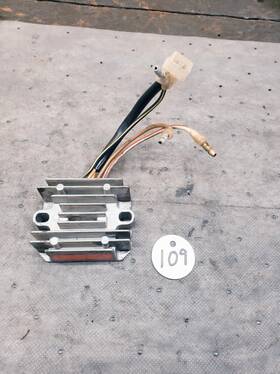
( Manufacturer Part Number: 21066-1012 ), ( Part Type: Voltage Regulator ), ( Vintage Part: Yes ), ( Country Of Origin: Japan )
Review KAWASAKI Voltage Regulator Reg fits KE100 KE125 KE175 1974-95
The **Kawasaki 21066-1012 Voltage Regulator** is a critical and highly sought-after component designed specifically for Kawasaki s iconic **KE100, KE125, KE175, KM100, and KS125** models produced between **1974 and 1995**. This regulator is a precision-engineered electrical component that plays an essential role in maintaining a stable and consistent voltage output to the motorcycle s electrical system, ensuring reliable performance of the ignition, lighting, and other electrical accessories. Crafted with Kawasaki s signature attention to detail, this regulator is built to withstand the demands of high-performance engines while delivering the precise voltage required typically around **6.0 to 6.5 volts** to prevent overcharging the battery and prolonging its lifespan. The unit features a robust, durable construction with high-quality internal components, including a **rectifier diode assembly** and a **voltage control transistor**, all housed in a compact yet rugged metal casing designed to resist heat and mechanical stress. Whether restoring a classic Kawasaki or maintaining a well-loved vintage bike, this regulator is a **must-have replacement part**, ensuring smooth electrical operation and preventing common issues like flickering lights, weak ignition, or battery drain. Its compatibility with a range of Kawasaki models from the mid-1970s through the mid-1990s makes it a versatile and indispensable upgrade for enthusiasts looking to preserve the authenticity and functionality of their beloved machines.
### **Pros and Cons of Buying a Kawasaki KE100/KE125/KE175/KM100/KS125 Voltage Regulator (1974 1995 Models)**
#### **Pros**
1. **Affordability** These bikes are often sold at low prices due to their age, making them accessible for beginners or collectors on a budget.
2. **Classic Design** The simple, utilitarian styling of these bikes appeals to enthusiasts who appreciate vintage motorcycles, especially those from the early 1970s.
3. **Reliability (When Well-Maintained)** The basic mechanical design is straightforward, and with proper upkeep, they can run reliably for years.
4. **Easy to Modify** The simplicity of these bikes allows for easy customization, such as upgrading the engine, suspension, or exhaust.
5. **Parts Availability** While not as abundant as modern parts, Kawasaki s legacy means that essential components (like the voltage regulator in question) can still be sourced from aftermarket suppliers or salvage yards.
6. **Low Running Costs** Fuel efficiency is decent for their time, and basic maintenance (oil changes, chain adjustments) is inexpensive.
7. **Historical Significance** For collectors, these bikes represent an important era in motorcycle history, particularly in the development of lightweight commuters and racing bikes.
8. **Lightweight & Maneuverable** The small displacement and simple frame make them easy to handle in traffic or on tight roads.
9. **Potential for Restoration** A well-restored example can become a unique, valuable bike, especially if it s rare or in excellent condition.
10. **No Modern Complexity** Unlike modern bikes with electronic fuel injection, ABS, and advanced suspension, these bikes have no complicated systems to fail.
---
#### **Cons**
1. **Age & Wear** Most of these bikes are 40 years old, meaning they may have significant rust, worn-out components, or structural fatigue.
2. **Reliability Issues** Without proper maintenance, they can develop leaks, seized engines, or failing electrical systems (e.g., the voltage regulator may need replacement).
3. **Limited Power & Performance** The KE100/KE125/KE175 engines are underpowered by modern standards, making them slow and inefficient compared to contemporary bikes.
4. **Poor Fuel Economy (Modern Standards)** While better than some older bikes, they still consume fuel inefficiently compared to modern commuters.
5. **Safety Concerns** Lack of modern safety features (disc brakes, ABS, frame rigidity) makes them less safe in collisions or high-speed riding.
6. **Electrical Problems** The voltage regulator (part #21066-1012) may be failing, leading to battery drain, dim lights, or no-start conditions. Replacing it can be tricky without proper wiring knowledge.
7. **Resale Value** Unless it s a rare or restored example, these bikes have little to no resale value compared to modern or even mid-2000s bikes.
8. **Environmental & Legal Issues** Some may not meet modern emissions standards, and in certain regions, they may require modifications to be street-legal.
9. **Limited Comfort** Ergonomics are basic, with little suspension travel, making long rides uncomfortable.
10. **Difficulty Finding Skilled Mechanics** Many modern mechanics are unfamiliar with these bikes, making repairs or diagnostics harder.
---
### **Conclusion**
Buying a **Kawasaki KE100/KE125/KE175/KM100/KS125 with a voltage regulator issue (1974 1995)** is a decision that depends heavily on your goals:- **If you re a collector or enthusiast** who appreciates vintage bikes and is willing to invest time in restoration, this could be a rewarding project.
- **If you need a practical, daily commuter**, a modern bike with better reliability, safety, and efficiency is a far better choice.
- **If you re looking for a budget bike to modify**, these can be fun but require significant work to be roadworthy.
- **If you re buying for parts**, the voltage regulator (or other components) may be worth salvaging, but expect to spend extra on repairs.
The **voltage regulator (21066-1012) is a critical component** if it s failing, replacing it is essential, but sourcing a genuine or compatible aftermarket part may be difficult. A multimeter test can confirm if the regulator is the issue before committing to a purchase.
---
### **Recommendation**
- **Do not buy as a daily rider** unless it s in pristine condition and you re prepared for frequent maintenance.
- **Buy only if:**- You re restoring it as a hobby.
- You have mechanical skills and access to parts.
- You re okay with limited power, comfort, and modern safety features.
- **If you need a functional bike**, consider a **modern commuter (e.g., Honda CB300F, Yamaha MT-03, or a used 2010s bike)** for better reliability and safety.
- **If you re buying for parts**, check salvage yards or eBay for the voltage regulator prioritize testing it before purchase.
For most riders today, the **cost of restoration and upkeep outweighs the benefits** of owning a 40 year-old Kawasaki commuter. However, for those with a passion for vintage motorcycles, a well-researched project bike can be a rewarding experience.
Details:
FITMENT: KE100-A10 KE100 1981 KE100-A5 1976 KE100-A6 1977 KE100-A7 1978 KE100-A8 1979 KE100-A9 1980 KE100-B1 1982 KE100-B10 1991 KE100-B11 1992 KE100-B12 1993 KE100-B13 1994 KE100-B14 1995 KE100-B2 1983 KE100-B3 1984 KE100-B4 Canada Only 1985 KE100-B5 1986 KE100-B6 1987 KE100-B7 1988 KE100-B8 1989 KE100-B9 1990 KE125-A10 KE125-A3 KE125-A4 KE125-A5 KE125-A6 KE125-A7 KE125-A8 KE125-A9 KE175-D2 KE175-D3 KE175-D4 KE175-D5 KM100-A1 KM100-A2 KM100-A3 KM100-A3A KM100-A4 KM100-A6 KM100-A7 KS125 1974 KS125-A 1975 1981.
part #: 210661012 prices
- $79.99-$229.99
specifications cyclevintagee:
- for models: Ke100, Ke125, Ke175
- for makes: Kawasaki
- for years: 1974-95
- mpn: 21066-1012
- part type: Voltage Regulator
- vintage part: Yes
- country of origin: Japan
payments cyclevintagee:
- wallet: Apple-pay
- other
- credit card: Discover
returns cyclevintagee:
- paid by: Seller
- policy: Returns Accepted
- time: 30 Days
general cyclevintagee:
- Parts Accessories > Motorcycle Scooter Parts Accessories > Other Motorcycle Scooter Parts Accessories
- condition: Used
offer cyclevintagee:
- availability: In Stock
- started: March 11, 2026
- options: Ship-to-home
- best offers: True
- quantity: 1
- sold: 0
shipping cyclevintagee:
- class: Standard
- cost: $0.00
- transit: 2-6 Days
- type: Calculated
- carrier: USPS
- service: USPS Ground Advantage
seller cyclevintagee:
- city: Spokane, Washington
- rating: 100.0%
- # reviews: 3020
Kawasaki 21066-1012 Is Similar To:
- 21066-018 Kawasaki Nos Regulator Generator Kz Oem (34.4% similar) 1STKICKCYCLES. All parts are original genuine nos they may show shelf ware or need dusting from decades of storage. I combine shipping. Please see photo double check part number to make sure it fits your motorcycle before buying. Genuine oem part. Part is new old stock. Please see my many other ...(November 4th, 2018)
- 21061-014 Kawasaki H1 H2 Kh500 Regulator (42% similar) Brand new, never installed...(April 10th, 2016)
- Kawasaki 21066-1008 81-82 Kz650 Kz 650 H Csr Electrical Voltage Regulator Rectifier Vintage (60% similar) Connector is nice. Works well and is guaranteed against DOA. Is clean and in good shape...(October 4th, 2024)
- Kawasaki 21066-024 Genuine Oem Hazard Voltage Regulator Z1 Kz900 Kz1000p Pn (57.1% similar) Oem hazard regulator removed from a 1976 KZ900 kawasaki...(January 12th, 2025)
- Kawasaki 21007-1050 1984-1985 Vn700 4 Cyl Regulator Bracket Oem 16073-1051 (48.4% similar) Left and right is from the riding position perspective. More from this motorcycle. Please research fitment prior to buying. These items are used will show some dirt, scratches, dings, etc. Mileage 20,972, removed from a 1985 kawasaki VN700 4 cylinder...(February 10th, 2026)
- Kawasaki Sh548-12 07 Oem Orignal Kawasak I Regulator Rectifier And Fender Klr650 Klr (36.8% similar) Fender and rectifier came off a 2007 KLR650 with 7k miles. Also have the rest of bike just ask...(February 25th, 2026)