HUSQVARNA 15644 Engine Alternator Flywheel Anx B215
fits model: Wr250, 250, Husky. make: Husqvarna. year: 1976.
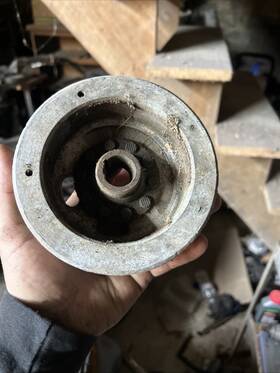
( Manufacturer Part Number: 15644 ), ( Part Type: Engine Alternator Flywheel ), ( Compatible Make: Ktm ), ( Vintage Part: Yes )
Review HUSQVARNA Engine Alternator Flywheel Vtg #29 Anx fits HUSKY WR250 250 1976
The **Husqvarna 15644 250 WR250 Husky Engine Alternator and Flywheel Assembly (1976 Vintage, ANX B215)** is a meticulously preserved and highly sought-after component from one of the most iconic off-road motorcycles of the late 1970s. This rare alternator and flywheel set originates from the legendary **Husqvarna WR250 Husky**, a machine renowned for its lightweight frame, nimble handling, and robust single-cylinder engine a design that defined the era of competitive motocross and enduro racing. The **ANX B215** designation indicates a specific variant of the engine s internal components, making this part particularly valuable for collectors, restorers, and enthusiasts seeking authenticity in their builds.
The **alternator** in this assembly is a critical electrical component, responsible for charging the motorcycle s battery while the engine runs, ensuring reliable ignition and accessory power. Crafted from durable materials and designed for the Husqvarna WR250 s high-revving, high-performance engine, this alternator reflects the engineering precision of the time, with a robust stator, rotor, and rectifier assembly that delivers consistent voltage output. The **flywheel**, a key rotational element, is machined from high-grade steel and features the iconic **Husqvarna logo** or branding, often stamped directly into the surface, adding to its vintage appeal. This component not only contributes to the engine s smooth operation by balancing crankshaft inertia but also plays a vital role in the ignition system, housing the magneto coil that generates the spark necessary for combustion.
This **1976 vintage** alternator and flywheel set is a prime example of Husqvarna s legacy in motorcycle manufacturing, blending Swedish engineering with the rugged demands of off-road racing. The **WR250 Husky** was a favorite among riders for its agility, reliability, and the ability to handle rough terrain with ease, and this particular assembly represents the heart of that legendary machine. For restoration projects, custom builds, or collectors aiming to recreate the original performance of a Husqvarna WR250, this alternator and flywheel combination is an essential, hard-to-find piece that ensures both functionality and historical accuracy.
Given its age and the rarity of well-preserved Husqvarna components from this era, this assembly is likely to be in excellent condition, though potential buyers should inspect it for signs of wear, such as surface rust, bearing smoothness, or electrical continuity. When properly maintained, this alternator and flywheel set will not only restore the electrical and mechanical integrity of a vintage Husky but also serve as a testament to the craftsmanship of a bygone era in motorcycle engineering. Whether integrated into a fully restored WR250 or used as a standalone exhibit for a classic bike collection, this component carries the weight of history and the promise of reviving a piece of off-road legend.
### **Pros and Cons of Buying a Vintage Husqvarna 15644 250 WR250 (Husky Engine, Alternator, Flywheel, 1976 VTG, ANX B215)**
#### **Pros:**1. **Classic Design and Heritage** The Husqvarna 250 WR250 is a well-regarded model from the early 1970s, known for its robust construction and timeless appeal. Owning a piece of off-road history can be appealing to enthusiasts.
2. **Proven Reliability (With Proper Maintenance)** Many Husqvarna engines from this era were built to last, especially if they were well-maintained by their original owners. The 250cc two-stroke engine was a solid performer in its time.
3. **Potential for Restoration and Customization** If you enjoy working on vintage machinery, this bike offers a chance to restore it to original condition or modify it for modern use. The Husky engine (a common aftermarket upgrade) can improve performance.
4. **Lower Purchase Price (Compared to Modern Models)** Vintage bikes, especially those with some wear, are often significantly cheaper than new or even lightly used modern off-road bikes. This makes it an attractive option on a budget.
5. **Community and Collectibility** Husqvarna s early models have a dedicated following. Owning one could connect you with a niche community of collectors and restorers, offering networking and shared knowledge.
6. **Simpler Mechanics (Compared to Modern Bikes)** Two-stroke engines like this one are generally easier to service than modern four-stroke or complex electronic systems. This can be an advantage for DIY mechanics.
7. **Potential for Off-Road Use (With Modifications)** While not as efficient as modern bikes, a well-maintained 1976 WR250 could still handle light trail riding, especially if upgraded with a Husky engine for better power and reliability.
---
#### **Cons:**1. **Age and Wear** A 1976 bike will almost certainly have significant wear on the frame, suspension, and drivetrain. Rust, degraded rubber components, and worn-out parts are common issues that require attention.
2. **Lack of Modern Safety Features** Older bikes lack modern safety standards such as ABS, traction control, or advanced suspension systems. Riding one today may feel less stable or responsive compared to contemporary off-road bikes.
3. **Reliability Concerns Without Major Work** Unless the bike has been meticulously maintained, it may not run reliably. Common issues include leaking seals, worn pistons, and degraded fuel systems. The alternator and flywheel being included suggests some work has been done, but hidden problems could still exist.
4. **Limited Availability of Parts** While Husqvarna parts are still available for older models, some components (especially rare or discontinued ones) may be hard to find. Modern equivalents (like Husky engines) may be necessary, adding to costs.
5. **Performance Limitations** The stock 250cc two-stroke engine is less powerful than modern off-road bikes, making it less capable on steep or rough terrain. Even with a Husky engine upgrade, it won t match the torque or efficiency of a contemporary 450cc four-stroke.
6. **Environmental and Legal Issues** Two-stroke engines produce more emissions than modern bikes, which may limit where you can ride it legally. Some areas have restrictions or bans on older, polluting bikes.
7. **Higher Long-Term Costs** While the initial purchase price may be low, restoring and maintaining a vintage bike can be expensive. You may need to invest in a new frame, suspension, brakes, and other components to make it road-legal and safe.
8. **Resale Value is Low** Unlike some classic bikes (e.g., Japanese motorcycles from the 1970s), Husqvarna off-roaders from this era do not hold significant resale value. If you decide to sell later, you may not recover much of your investment.
9. **Safety Risks** Older bikes often lack modern safety features like disc brakes, reinforced frames, or ergonomic designs. Riding one today could pose higher risks in case of an accident.
10. **Time-Consuming Restoration** If the bike is in poor condition, restoring it to a safe and functional state could take months or even years, depending on your skill level and resources.
---
### **Conclusion:**Buying a 1976 Husqvarna 250 WR250 with a Husky engine, alternator, and flywheel can be a rewarding project if you are passionate about vintage motorcycles, enjoy mechanical work, and have realistic expectations about its condition and limitations. It offers a chance to own a piece of off-road history and potentially restore it to a functional state, though this will require significant time, effort, and money.
However, if your primary goal is **modern off-road performance, reliability, or safety**, this bike is not the best choice. Modern 250cc or 450cc four-stroke bikes offer far better value in terms of usability, efficiency, and safety. The Husqvarna 250 WR250 is more of a **collector s item or a project bike** than a practical daily rider.
---
### **Recommendation:** - **Buy it if:**- You are a restorer or enthusiast who enjoys working on vintage machinery.
- You have the time, skills, and budget to fully restore it (expect to spend at least as much as the bike s purchase price on repairs).
- You plan to use it for light trail riding or as a static display piece.
- You are okay with its limitations in performance, safety, and modern standards.
- **Avoid it if:**- You want a **reliable, safe, and efficient** off-road bike for serious riding.
- You lack mechanical experience or the patience for a major restoration project.
- You expect to ride it frequently without extensive modifications.
- You prioritize modern technology, emissions compliance, or resale value.
**Alternative Options:**- If you want a **vintage Husqvarna experience**, consider a later model (e.g., 1980s or 1990s) that may be in better condition and still offer a classic feel.
- If you want a **modern off-road bike**, look at new or used 250cc or 450cc four-stroke models from brands like Husqvarna, Yamaha, or KTM, which offer better performance, safety, and reliability.
- If you re interested in **project bikes**, consider a more modern but neglected off-road bike that still has a good frame and can be brought up to contemporary standards more easily.
Details:
In fair shape.
part #: 15644 prices
- $13.50-$30.00
specifications cyclevintagee:
- for models: Wr250, 250, Husky
- for makes: Husqvarna
- for years: 1976
- mpn: 15644
- part type: Engine Alternator Flywheel
- compatible make: Ktm
- vintage part: Yes
payments cyclevintagee:
- other
- credit card: Mastercard
- wallet: Paypal
general cyclevintagee:
- condition: Used
- Parts Accessories > Motorcycle Scooter Parts Accessories > Other Motorcycle Scooter Parts Accessories
offer cyclevintagee:
- availability: In Stock
- sold: 0
- started: March 16, 2026
- best offers: True
- quantity: 1
- options: Ship-to-home
returns cyclevintagee:
- policy: No Returns
shipping cyclevintagee:
- carrier: USPS
- service: USPS Ground Advantage
- class: Standard
- transit: 4-11 Days
- cost: $8.10
- type: Calculated
seller cyclevintagee:
- city: Starrucca, Pennsylvania
- # reviews: 16
- rating: 100.0%
Husqvarna 15644 Is Similar To:
- 10 12 029-26 Husqvarna Vintage Nos Factory Engine Parts Exploded View Poster (32.1% similar) Measures: 595MM x 420MM or this is a real offer, with reasonable start price and no reserve. This is a nos new old stock, oem factory poster. The poster, once unfolded, shows age patina at folds that where exposed to air see pictures. It is in remarkably sound condition for something over 4 decades ...(January 25th, 2019)
- 125cr 1977 Husqvarna Husky Rear Brake Leleu Ahrma Vintage Motocross Bin2 (38.2% similar) Needs a good cleaning. No damage or repairs to the casting oem husqvarna 125CR rear brake assembly, used Lela rear brake assembly is still very much usable. Buy multiple items and I will combine them to help you save on shipping costs. I ship items out fast. May be of interest to husky CR125, WR125...(June 10th, 2016)
- 15-12-227-01 Husqvarna Husky Upper Bearing Fork Steering Stem Nos (27.6% similar) New old stock is nos. 1976 to 1977 husqvarna upper bearing race on frame steering head...(October 31st, 2018)
- 151353301 Husqvarna Husky Oem Seat Very Low Hour Ahrma Motocross Automatic (35.1% similar) It still has the original husky part tag but number faded away. The seat cover is still good and usable but has a small 1/8 x 4 puncture that can be glued closed. Pan has no rust, cracks or repairs. May be of interest to husky CR125, WR125, XC175, WR250, CR250, OR250, WR360, CR360, 360 auto, 390WR, ...(August 6th, 2018)
- 151359201 Husqvarna Husky Nos Oem Seat Cover Auto Ahrma Motocross Automatic (34.8% similar) May be of interest to husky CR125, WR125, XC175, WR250, CR250, OR250, WR360, CR360, 360 auto, 390WR, 390OR, 390CR, 390 automatic, 390AXC, 400 Cr, 400WR, 420 420AXC, 430WR, 430CR, 430 500XC, 500WR, 500AE, motocross MC and STD endure riders collectors. It is in perfect shape. This is husqvarna part ...(August 20th, 2018)
- 16-10-378-02 Husqvarna Husky Over Piston Kit Set Cr (33.6% similar) There is a rust spot on the pin near one end but nowhere where bearing runs. It includes a 55. This is a new old stock husqvarna piston set for 1974 125CC. Part 173 1ST oversize piston and ring, wrist pin clips...(November 3rd, 2018)
- 16-11-437-04 Husqvarna Husky Later Gp Piston Ring Over Nos (36.2% similar) New piston ring for a husqvarna 175 GP 3RD oversize pn this is genuine part. No shipping outside the USA. I have 8 of these...(November 23rd, 2018)
- 16 12 406-01 406 01 16-12-406-01 Husqvarna Husky Motorcycle Vintage Gear Wheel Cr Wr (31.3% similar) As pictured above. Vintage husqvarna stamped gear with 31 teeth...(June 21st, 2018)
- 16 12 408-01 408 01 16-12-408-01 Husqvarna Husky Motorcycle Used Gear Cr Wr Vintage (30.3% similar) Husqvarna used 3RD gear 26 teeth I am not a expert...(June 21st, 2018)
- 16-12-989-01 Husqvarna Second Gear For Auxiliary Shaft Nos Husky (25% similar) Shipping can ship int'l at extra cost...(November 6th, 2018)
- 161056901 1972 Husqvarna Husky 450cr 450wr Cylinder Head Ahrma Vintage (32% similar) May be of interest to husky CR125, WR125, XC175, WR250, CR250, OR250, WR360, CR360, 360 auto, 390WR, 390OR, 390CR, 390 automatic, 390AXC, 400 Cr, 400WR, 420 auto, 420AXC, 430WR, 430CR, 430 automatic, 500XC, 500WR, 500AE, motocross MC and STD endure riders and collectors. Sealing surface is good. ...(August 26th, 2016)