HONDA 14721-286-020 Exhaust Valve Springs Keepers
fits model: Cl350. make: Honda. year: 1972.
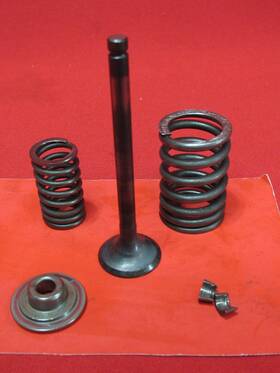
( Manufacturer Part Number: 14721-286-020 ), ( Part Type: Valve Spring Exhaust ), ( Country Of Origin: Japan )
Review HONDA Exhaust Valve Springs And Keepers fits CL350 1972
The **Honda 14721-286-020 72 CL350 Exhaust Valve Springs and Keepers** are precision-engineered components designed exclusively for Honda s iconic **CL350 motorcycle**, a classic cruiser known for its timeless design and reliable performance. These high-quality valve springs and keepers are essential for maintaining optimal engine function, ensuring smooth valve operation, and preventing premature wear or failure in the exhaust valve assembly. Crafted from durable, heat-resistant materials, these springs are engineered to withstand the intense thermal and mechanical stresses of high-performance riding, delivering consistent performance over thousands of miles. The valve keepers, often referred to as retainers, securely hold the valve in place, preventing it from bouncing or misaligning during rapid valve movement, which is critical for preventing engine knock and maintaining compression. Whether you're restoring a vintage CL350, upgrading an older model, or performing routine maintenance, these OEM-spec parts guarantee a perfect fit and reliable performance, matching the original equipment standards that Honda engineers originally specified. Proper installation of these components is vital, as incorrect assembly can lead to valve float, reduced engine efficiency, or even catastrophic engine damage, making them a must-have replacement for any serious rider or mechanic working on this classic motorcycle.
### **Pros and Cons of Buying Honda 14721-286-020 (72 CL350 Exhaust Valve Springs & Keepers)**
#### **Pros:**1. **Direct Fitment** This part is specifically designed for the **Honda CL350 (1972 model)**, ensuring compatibility without modification. It eliminates the risk of sizing issues that can occur with aftermarket or generic replacements.
2. **OEM Quality** As an original equipment manufacturer (OEM) part, it meets Honda s engineering standards for durability, performance, and reliability. This reduces the likelihood of premature failure compared to lower-quality aftermarket alternatives.
3. **Prevents Engine Damage** Worn or broken valve springs and keepers can lead to catastrophic engine failure, such as bent valves, piston damage, or valve float. Replacing these components proactively maintains engine health and extends its lifespan.
4. **Easy Installation** The part is straightforward to install, especially if you have basic mechanical experience or access to a mechanic. It typically requires removing the cylinder head, which is a manageable task for those comfortable with engine disassembly.
5. **Cost-Effective for Long-Term Use** While the upfront cost may seem higher than some aftermarket options, OEM parts often last longer and reduce the need for frequent replacements, saving money over time.
6. **Maintains Original Performance** Using genuine parts ensures the engine retains its intended power, efficiency, and smooth operation. Aftermarket parts may not match the original specifications, potentially affecting performance.
7. **Warranty Coverage** If purchased from an authorized Honda dealer or a reputable seller, the part may come with a warranty, providing peace of mind against defects.
---
#### **Cons:**1. **Higher Upfront Cost** OEM parts are generally more expensive than aftermarket alternatives. For budget-conscious buyers, this can be a significant drawback, especially if the part is not urgently needed.
2. **Limited Availability** Depending on the seller, genuine Honda parts may not always be in stock, requiring patience or ordering from a specialized supplier. Some parts, especially for older models like the CL350, may be harder to find than newer vehicles.
3. **Potential for Counterfeit Parts** Purchasing from untrusted sellers increases the risk of receiving fake or low-quality parts that may fail prematurely. Always buy from authorized dealers or well-reviewed online retailers to mitigate this risk.
4. **Labor Costs** While the part itself is straightforward, installing it may require professional labor if you lack mechanical experience. Labor costs can add to the total expense, especially if the job is complex or time-consuming.
5. **Overkill for Minor Issues** If the valve springs and keepers are only slightly worn but not yet failing, replacing them entirely may be unnecessary. In such cases, a more cost-effective solution might be to inspect and replace only the severely damaged components.
6. **Environmental and Ethical Concerns** Purchasing new OEM parts contributes to waste, as it does not encourage the reuse or recycling of existing parts. Some buyers may prefer aftermarket or used parts to reduce environmental impact.
7. **Time-Consuming Installation** Removing and reinstalling the cylinder head is a labor-intensive process that requires disassembling the engine. This may not be ideal for those with limited time or patience for extensive repairs.
---
### **Conclusion:**The **Honda 14721-286-020 valve springs and keepers** are a reliable and high-quality choice for restoring or maintaining the performance of a **1972 CL350 engine**. Their OEM status ensures compatibility, durability, and peace of mind, making them ideal for serious enthusiasts or those who prioritize long-term engine health. However, the higher cost and potential availability issues may deter budget-conscious buyers or those who prefer quicker, cheaper fixes.
For most owners facing **visible wear, unusual engine noises, or performance issues** related to valve train components, investing in this genuine part is justified. If the engine is otherwise in good condition and the symptoms are mild, a mechanic s advice on whether partial replacement (e.g., only the springs or keepers) is sufficient could help reduce costs.
### **Recommendation:**- **Buy from an authorized Honda dealer or a trusted online retailer** (e.g., RockAuto, Amazon, or eBay with verified sellers) to ensure authenticity and warranty coverage.
- **Compare prices** from multiple sources to find the best deal, but avoid sacrificing quality for significant cost savings.
- **Consider professional installation** if you lack experience with engine disassembly, as improper handling can lead to further damage.
- **If the engine is high-mileage or not a primary project**, weigh the cost against the value of the vehicle. For a classic or well-loved bike, the investment is worthwhile; for a secondary or low-value machine, aftermarket parts may suffice.
- **Inspect the rest of the valve train** (e.g., valves, guides, and rocker arms) during installation to address any hidden issues and prevent future problems.
**Final Verdict:** For owners who value **reliability, longevity, and OEM performance**, this part is the best choice. For those on a tight budget or dealing with minor issues, consulting a mechanic about partial replacement or aftermarket alternatives may be a pragmatic alternative.
Details:
If I did make a mistake will try to it right.
part #: 14721286020 prices
- $20.00-$175.09
specifications cyclevintagee:
- for models: Cl350
- for makes: Honda
- for years: 1972
- mpn: 14721-286-020
- part type: Valve Spring Exhaust
- country of origin: Japan
returns cyclevintagee:
- paid by: Buyer
- policy: Returns Accepted
- time: 14 Days
shipping cyclevintagee:
- class: Standard, Expedited
- transit: 2-7 Days
- service: USPS Ground Advantage, USPS Priority Mail
- cost: $8.30
- carrier: USPS
- type: Calculated
general cyclevintagee:
- condition: Used
- Parts Accessories > Motorcycle Scooter Parts Accessories > Other Motorcycle Scooter Parts Accessories
offer cyclevintagee:
- started: May 19, 2026
- sold: 0
- best offers: True
- quantity: 4
- options: Ship-to-home
- availability: In Stock
payments cyclevintagee:
- credit card: Mastercard
- other
- wallet: Apple-pay
seller cyclevintagee:
- city: Floyd, Iowa
- rating: 100.0%
- # reviews: 2322
Honda 14721-286-020 Is Similar To:
- 11350-ka4-770 Honda Stator Cover Left Crankcase And Gasket (31.1% similar) A light groove from shiftier rub. This cover and gasket came from a 1985 CR250. Should fit CR250. No cracks, splits or damage to mounting holes. Printed KA4-7710 on inside. It has some scuffs, scratches and dings...(July 6th, 2018)
- 11356-mct-000 And 11357-mct-000 Honda 2006 (17% similar) A 2006 honda silver wing FSC600DWITH close to 15,000 maintained miles. Because buyers try to keep our good parts and send their junk back us. Orders over 100 get free shipping to lower 48 USA states. This is against USA federal law and there a 10,000 dollar fine 10 year prison sentence for ...(May 3rd, 2017)
- 12023-465-405 Honda Nos Oem Valve Guide (33% similar) Chart pictures show more model fitment. New genuine honda in original package. Verify yours...(May 26th, 2018)
- 12111-kz3-l20 Honda Nos Oem Factory Left Gasket Rc Valve (23.3% similar) Honda gasket KZ3-L20...(November 7th, 2018)
- 12204-za0-315 Unbranded Nos Honda Dd Cylinder Head Guide Valve (28.6% similar) Buy with confidence...(August 22nd, 2018)
- 12209-107-760 Honda Nos Valve Seal Oem (33.3% similar) ...(January 12th, 2019)
- 12310-428-325 Honda Xr Cylinder Head Cover Valve Bolts (32.2% similar) Item shows normal wear. The item is used and may show wear, rust, corrosion, staining, scratches. The item appears to be in good working order. Please refer to the pictures for condition of items. This is a valve cover from 1980 honda XR250...(June 29th, 2019)
- 13103-964-810 Honda Atc Line Nos Art Piston And Rings (29.1% similar) Honda line 300 piston and rings 77MM...(September 27th, 2018)
- 13104-275-020 Honda Nos Oversize Pistons And Rings (35.1% similar) New old stock pistons and rings for the honda 305 CB77 CL77. Pistons are new but out of the box...(March 7th, 2019)
- 14100-gs2-003 Honda Valve Complete Reed Oem Nos Fit (33% similar) Note: my site only ships within the USA. Valve, complete reed oem honda nos P/N GS2-003 fits CR80R and CR85R...(January 16th, 2019)
- 14100-ka5-770 Honda Intake Reed Valve Cage Oem Assy (31.3% similar) Selling a complete oem original reed valve intake assembly from 1983 honda Cr 480 vintage 2 stroke motocross racing aroma VAX motorcycle. Please review all pictures before purchasing to note actual condition of the item...(September 3rd, 2018)